What Is Branded Calling and Why Does It Matter for Your Business?
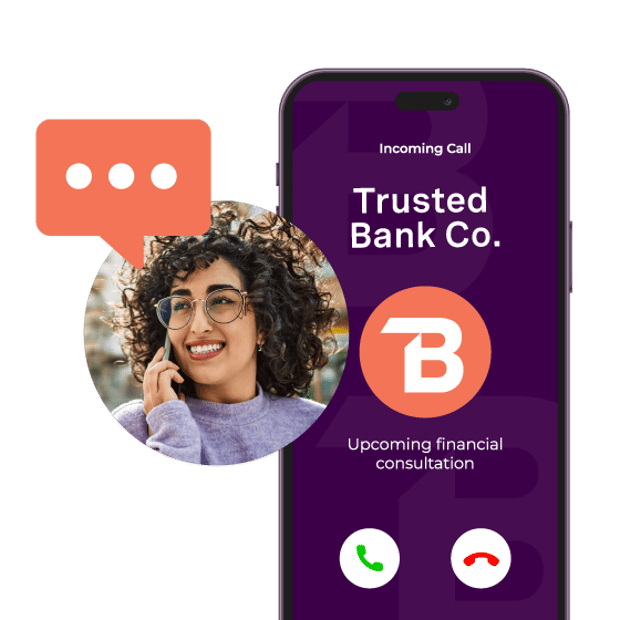
Branded calling helps businesses improve call answer rates, build instant trust, and protect against spoofing by showing a verified name, logo, and reason for calling on the recipient’s phone screen. Unlike generic or unrecognized caller ID, branded calls make it clear who's calling and why, leading to more conversations, better outcomes, and a stronger customer experience.
Organizations that rely on outbound calls for support, reminders, sales, or urgent alerts are using branded calling to build trust faster and convert more conversations into results.

-
1.
-
2.
-
3.
-
4.
-
5.
-
6.
-
7.
-
8.
-
9.
-
10.
-
11.
-
12.
-
13.
What is branded calling?
Branded calling, also known as branded caller ID, allows businesses to show their verified name, logo, and reason for calling directly on a recipient’s mobile screen. Instead of showing a plain number or being marked as "Unknown," your call appears clearly identifiable and trustworthy. This approach helps reduce spam concerns, boosts answer rates, and ensures customers know who’s contacting them, and why, before picking up.
How it works
Verification. Businesses work with verified providers to register their identity, number, and calling intent.
SHAKEN/STIR framework. Calls are authenticated using digital certificates that confirm the sender is legitimate and not spoofed.
Carrier display. Mobile carriers like AT&T, Verizon, and T-Mobile receive the verified information and display it on supported devices.
Rich call data. Your business name, logo, and a short call reason (like “Payment reminder” or “Delivery confirmation”) are shown on screen.
Key benefits
Builds customer trust and makes it more likely people will answer
Helps protect your brand against spoofing and fraudulent impersonation
Enhances ROI for teams making high-volume outbound calls
Improves engagement for calls like appointment alerts, account updates, or customer outreach
Who uses it
Banks and financial institutions, healthcare providers and clinics, e-tailers and ecommerce companies, utilities and service providers, contact centers and customer support teams
How branded caller ID works
Branded calling works by adding brand signifiers to a business caller ID. These could include:
A brand logo
A clear and accurate brand name
A business number
The department calling (for example, calls about sales promotions might be branded as “[COMPANY] promotions”)
The aim is to give the recipient total certainty about who is calling them and, in some circumstances, why. The recipient is then able to make an informed decision about whether or not to answer the phone. If they do answer, they are more likely to engage with the caller, as they know who they are (and possibly why they’re calling) and have actively chosen to respond.
How is a branded caller ID name determined?
Branded caller ID names differ greatly from traditional caller IDs. Traditional caller IDs come from CNAM (Caller ID Name) databases, which can be inaccurate. CNAM databases often cut down or truncate IDs, resulting in strange names appearing on recipient screens, a brand named “Masons” may become “Msons,” for example.
Inaccurate caller ID can be worse than no caller ID, making your business look spammy and unprofessional. Nobody wants to take a brand call from a business that seems like it can’t even spell its name.
On the other hand, the business determines brand caller ID names. In conjunction with a communications provider like Vonage, businesses can set their own caller IDs and even add additional brand signifiers like logos.
Branded calling vs. traditional caller ID
Understanding how branded caller ID differs from traditional caller ID is key to recognizing its value, especially in a world where unrecognized calls are increasingly ignored or flagged as spam.
Feature
Traditional Caller ID
Branded Calling
Display name
Pulled from CNAM databases, often outdated or abbreviated
Business-defined and verified name
Logo or visuals
None
Business logo and brand colors (on supported devices)
Call reason
Not shown
Optional message such as “Delivery Update” or “Service Reminder”
Call security
Low -— spoofing is common
High — verified through STIR/SHAKEN protocols
Control
Minimal — depends on carrier lookups
Full — brand controls the experience
Consistency
Varies across devices and carriers
Designed for cross-carrier consistency
Insight: While traditional CNAM records can sometimes display a business name, they often rely on outdated databases that abbreviate or truncate the name, leading to mistrust or confusion. Branded calling lets your business take full control of how you're presented, ensuring the caller ID is accurate, trustworthy, and on-brand, every time.
Common mistake: Some businesses assume that if their name appears on caller ID through CNAM, they don’t need branded calling. But CNAM doesn't protect against spoofing, and it doesn’t let you show logos or call reasons, which are key for trust and engagement.
Why branded calling is important
Caller ID plays a big part in whether or not someone picks up a phone call, and how much they trust the caller. And it’s becoming increasingly important as millennials and Gen Z become more prominent — 23% of millennial and Gen Z consumers never answer phone calls for any reason, and many more only answer to caller IDs they know and/or trust.
Branded calling makes your caller ID trustworthy, respectable, and engaging. Getting your caller ID right is crucial if you want people to answer your business calls and start conversations on the right foot.
Benefits of branding calling
Branded calling can bring big benefits for business and customers. Here are just a few:
Increased answer rates
80% of consumers don’t answer unidentified calls, often assuming they are fraudulent. Inaccurate, truncated, or misspelled caller ID has a similar effect, with consumers less likely to trust brand names that aren’t spelled out fully and correctly. This can impact businesses beyond simple call pickup rates. Your business can suffer reputational harm if your caller ID doesn’t exist or looks “spammy.”
Branded caller ID shows recipients exactly who’s calling and indicates that the business on the line is professional, legitimate, and trustworthy. This makes it much more likely that recipients will answer the phone. 31% of contact center workers say optimizing caller ID is the best way to improve answer rates.
Greater call engagement
When recipients see who’s calling and decide to answer, they’re likely prepared to engage. Branded caller ID prepares recipients for the conversation before they even hit the green button.
This means that your agents won’t waste valuable time explaining who is calling and why and are much less likely to have recipients hang up halfway through that explanation. Instead, they’ll get through to people who know who they are and possibly why they’re calling. The result is greater call engagement, making life much easier for your agents.
Greater brand recognition
Adding logos and other branding to your caller ID is a great way to boost brand recognition. It helps customers become more familiar with your branding, making them more likely to recognize it in other contexts.
Anything that gets your logo, name, and so on out there helps to familiarize people with your unique branding. This is excellent for brand recognition and, ultimately, brand positioning.
Raises conversion rates
We’ve spoken above about how branded caller ID can boost call engagement. In a sales context, this also leads to higher conversion rates.
People who answer branded calls will likely be prepared to speak to brand representatives. This means they will hear your agents out, ask pertinent questions, and generally be more receptive to conversion. Because the call doesn’t land entirely "cold," prospects are less likely to hang up mid-conversation. The result is a higher call conversion rate.
Cuts the risk of spoofing and scamming
Spoofing (also known as “vishing" or “voice phishing”), in which scammers impersonate individuals or brands to defraud people of money or data, is growing. Voice phishing attacks surged by 442% in recent years, as cybercriminals increasingly used fraudulent phone calls to steal sensitive information, deploy malware, or scam victims out of money, according to a recent report from CrowdStrike.
It’s a lot harder for vishers to spoof branded calls. This is because branded caller IDs are harder to replicate (especially if details like logos are included). Also because many platforms offering branded caller ID also offer spoofing and scamming protection among their branded calling features. When you make calls from a branded ID, recipients can be sure that you are who you say you are and that your call is legitimate.
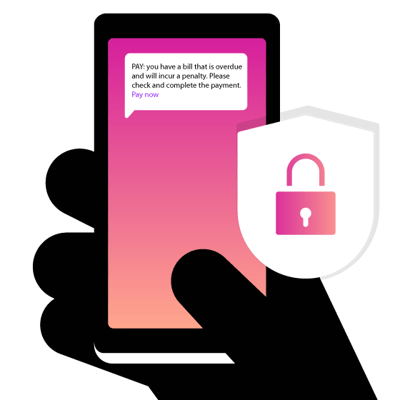 Fight messaging fraud with Vonage Fraud Defender
Is enterprise branded calling trustworthy?
Enterprise branded calling is much more trustworthy than the alternative. When the caller ID displays who is calling and clear, professional-looking brand identifiers, recipients are more likely to trust the call and answer their phones.
What’s more, many telecommunications providers offer enterprise authentication solutions. These safeguard against spoofing and make sure that every call from your brand ID is verified. So customers can safely answer branded calls knowing they are fully verified and legitimate and not out to scam or defraud them.
Enterprise branded calling can also yield potential complexity in building and deployment, as it’s more technically complex than legacy voice technology. Your business can mitigate this by choosing a trusted voice API vendor like Vonage that offers consulting and support services.
Challenges and limitations of branded calling
Branded calling comes with some challenges. Here are some of the things you may encounter or that you should consider when seeking a branded calling solution:
Consistency. It’s not always easy to make branded caller IDs consistent across all networks and displays. Think about how caller IDs are handled by different providers and phone operating systems, and optimize your branded ID to be as consistent as possible for all potential recipients.
Security. When picking a branded caller ID solution, consider security. While branded caller ID makes your brand more trustworthy, adding extra security features, such as caller authentication and verification, is also a good idea.
Compliance. Different states and countries have different regulations governing telecommunications. For example, in Washington State, callers must identify themselves and their business within 30 seconds of the call being picked up. Agents calling into Washington cannot assume that branded caller ID has done this job for them.
Lack of industry standards. Branded calling is becoming increasingly popular, but it is not standardized yet. This can confuse consumers as they receive inconsistently branded calls from various businesses.
Expense. The right branded calling solution should provide strong ROI, but the wrong solution could leave you paying far more than needed. Always thoroughly check plans and pricing before signing up for anything.
Insight: Branded caller ID appearance can vary depending on the recipient’s device, operating system, and carrier. For example, Android devices often support richer visuals like logos and call reasons, while iOS support may be more limited. Carriers also differ in how they display branding and what fallback information shows when elements aren’t supported. Businesses should test across devices and carriers to ensure the experience is as consistent and clear as possible.
How businesses can use branded calling to boost trust and results
Branded calling isn’t just about aesthetics. It’s about improving outcomes across customer engagement, outreach, and service delivery. Here are some hypothetical examples of how different industries could use branded caller ID to drive measurable impact.
Healthcare: Reducing missed appointments with branded reminders
A regional health network could implement branded caller ID for appointment confirmation calls. Instead of showing an unrecognized number, calls would appear as something like “Main Street Pediatrics, Appt Reminder.” Patients would immediately recognize the source, potentially leading to fewer missed appointments and faster confirmations, saving time for staff and reducing rescheduling overhead.
Retail: Improving order pickup and customer satisfaction
A large retailer with curbside pickup options could begin branding outbound calls as “Your Order is Ready, [Brand Name].” Customers would be more likely to answer these calls promptly, leading to smoother handoffs and fewer delays at pickup locations. Call branding can also reinforce brand recognition and position the business as organized and proactive.
Banking: Enhancing security with branded fraud alerts
A financial institution might use branded calling to notify customers of suspicious account activity. Calls could be labeled “Security Alert, [Bank Name],” making them more likely to be answered. Possible results: Customers report higher satisfaction with fraud detection efforts, and support teams have reduced follow-up time when initial calls are picked up on the first try.
Utilities: Managing outages and service updates
A utility company might use branded caller ID to share updates during service disruptions. Calls could display as “Outage Info, [Utility Company]” and include call reasons like “Estimated Restoration Time.” This could reduce inbound support call volume during outages and keeps customers informed without overwhelming contact centers.
How to implement branded calling
Branded calling is simple for users to experience, but for businesses, implementation takes a few critical steps behind the scenes. Most reputable providers handle the technical heavy lifting, but knowing what happens in the background helps you make informed decisions.
Here’s how it works from setup to screen display:
1. Register and verify your business identity
You’ll first register your business with a branded calling provider, who will work with mobile carriers to verify your identity. This includes validating your phone numbers, campaign type (e.g., sales, support, appointment reminders), and ensuring your content meets anti-spam and security guidelines.
Pro Tip: Choose a provider who partners directly with carriers for faster approval and broader visibility across networks.
2. Authenticate your outbound calls using STIR/SHAKEN
Once registered, calls are digitally signed using the SHAKEN/STIR framework, short for Secure Telephone Identity Revisited and Signature-based Handling of Asserted information using toKENs.
This standard uses digital certificates to confirm that your calls haven’t been spoofed or altered, increasing delivery and trust.
Common mistake: Some businesses assume a logo alone builds trust. Without STIR/SHAKEN protocols, your calls may still be flagged by carriers.
3. Enable rich call display through carrier networks
After verification, your branded call display, name, logo, and optional message (e.g., “Appointment Reminder”), is enabled through supported carriers like AT&T, T-Mobile, and Verizon. Not all carriers support visuals the same way, so coverage may vary by region or device type.
Insight: Logos and custom messages may only appear on specific devices or apps. Still, even partial branding (like your full business name) significantly improves answer rates.
4. Test and refine your branded call strategy
Once deployed, monitor metrics like call answer rate, duration, conversion, and callback behavior. Use this insight to fine-tune your call display strategy, including which departments use branded calling, what messages resonate, and how frequently to update branding assets.
Why branded calling matters for the future
Customer trust in brands and brand communications is declining. Building and maintaining brand/customer trust is a major priority for modern businesses. Brands with a trustworthy reputation will gain a big advantage over their competitors and win lasting customer loyalty.
Branded calling is a good way to establish that your company is legitimate and trustworthy. It proves that you are exactly who you say you are and are dedicated to keeping communications secure and professional.
Building trust, preventing scams, keeping communications secure, and keeping your customers informed are all crucial for succeeding in modern business. Branded calling can help with all of these factors. All in all, branded calling is the future of business communications. Businesses that opt to brand their calls will gain a big advantage.
How to know if branded calling solutions are right for your business?
A branded calling solution is right for your business if you want to:
Build trust with your customers
Increase your call pickup rate
Rely on outbound calling
Have more control over your business information display
Make it harder for scammers and vishers to imitate your brand
Boost your outbound conversion rate
Increase your outbound ROI
If any of this is what your business needs, it’s time to look into a good branded calling solution like the one from Vonage.
Transform your outreach with branding calling
Branded calling is the future of business outreach. With branded calling, you can build your brand reputation, enhance trust, and quickly gain big outbound ROI gains.
Vonage offers enterprise branded calling as part of its outbound communications solutions. Features like Caller ID management and verified calling give businesses full control over the information displayed when they make a call. Businesses can customize their caller ID with logos, brand names, and other important context.
Vonage is your solution if you want to improve answer rates and slash call rejection. Explore Vonage Branded Calling today.
And if you’re interested in exploring how Vonage Branded Calling pairs with messaging solutions and other personalized engagement — that will take customers from “don’t pick up” to “must pick up” — then it’s time to Own Your Brand.
Sign up now
Was this helpful? Let's continue your API journey
Don't miss our quarterly newsletter to see how Vonage Communications APIs can help you deliver exceptional customer engagement and experiences on their favorite channels.

Thanks for signing up!
Be on the lookout for our next quarterly newsletter, chock full of information that can help you transform your business.
Still have questions about branding calling?
Branded calling is a secure, verified system used by legitimate businesses to display their identity on outbound calls. Spoofing, on the other hand, is a fraudulent tactic where bad actors disguise their number to trick recipients. Branded calling uses frameworks like STIR/SHAKEN to protect against spoofing and confirm the authenticity of the caller.
Not yet. Branded caller ID is supported on many Android devices and some iOS apps, but display can vary depending on the carrier, phone model, and operating system. Even when rich visuals like logos aren’t shown, verified names and call reasons often still appear, offering a major trust advantage.
No. Branded calling can benefit businesses of all sizes, especially those that rely on outbound communications. Small and mid-sized businesses can work with providers to enable branded caller ID without needing a massive IT team or telecom infrastructure.
Not directly. Branded caller ID applies to voice calls, while business SMS has its own verification standards, such as 10DLC or toll-free number registration. However, using verified identity across all channels, voice, SMS, email, helps build consistent trust and recognition.
Implementation time varies depending on the provider, but many businesses can go live within a few weeks. The process includes identity verification, number registration, call reason setup, and STIR/SHAKEN authentication to ensure compliance and deliverability.
Yes, but branded details may not appear in the voicemail notification. However, many users are more likely to listen to voicemail from a number they recognized on screen, increasing your callback and resolution rates.
Most branded calling platforms allow updates to the name, logo, or call reason through a management portal or API. This is helpful for seasonal campaigns, department-specific numbers, or service-based messages like “Delivery Confirmation” or “Account Update.”
No, but STIR/SHAKEN compliance is required for U.S. voice service providers under FCC regulations. Branded calling builds on top of these standards to improve delivery and engagement, but it’s not a legal mandate.
Look for a provider that partners directly with carriers, supports STIR/SHAKEN, and offers flexible tools for managing caller ID content. Bonus if they also offer analytics and API access so you can test and optimize over time.