Real-Time Risk Scoring in Payments Using Mobile Identity Insights
It’s no secret that the payments industry is fighting an uphill battle against fraud. What used to be predictable patterns of abuse that could be blocked with static rules or basic Know Your Customer (KYC) checks has turned into something more elusive, more adaptive, and far more expensive.
According to the 2025 LexisNexis® True Cost of Fraud™ Study, U.S. ecommerce merchants now lose $4.61 for every $1 of fraud, with mobile transactions like digital wallets and peer-to-peer payments accounting for more than 30% of total fraud-related expenses. Canadian merchants face similar losses at $4.52 per $1 of fraud.
That number isn’t just dramatic. It reflects a real and growing disconnect between the speed of fraud innovation and the pace of fraud prevention technology. This article explores the fraud landscape and how you can fight this ever-growing problem.


Payments fraud is evolving faster than defenses
The core of the problem is that most fraud defenses are built to catch yesterday’s attacks. They rely on static identity checks, rigid verification steps, or delayed data that doesn’t reflect the user’s current risk.
A phone number may appear clean during account creation but could be compromised hours later. And in many environments, it’s still trusted like nothing ever changed. This gap between what was verified and what is currently true is exactly what fraudsters target.
They take advantage of tools designed to approve users, not continuously question them. SIM swaps, burner phones, and social engineering attacks pass through the cracks, while real customers are flagged by mistake. False positives pile up. Friction increases. Revenue is lost on both sides of the equation.
The challenge for fraud and risk teams is clear. If you lock things down too tightly, you push away good users. If you leave things wide open, you let the bad ones in. The solution? A smarter way to measure trust.
Your business needs a way to evaluate risk in real time without making the user jump through more hoops. This is where carrier-based data, mobile intelligence, and real-time identity signals can completely reshape how payment fraud is managed. Because here’s the truth: Not all users are equal. Know their risk before it costs you.
What is real-time risk scoring in payments?
Real-time risk scoring in payments is a method of evaluating the trustworthiness of a user or transaction at the exact moment it occurs. Instead of relying on stored or historical data, it analyzes signals that reflect what is happening right now.
The goal is to make more intelligent decisions in milliseconds, not minutes. These decisions can influence whether a transaction is approved, whether a user is asked to authenticate again, or whether a session is flagged for review.
Unlike traditional models that apply the same logic to every user, real-time scoring allows for context-aware fraud detection. A transaction coming from a known, active device might pass through without interruption, while one from a phone recently ported or with an invalid format could trigger stronger verification.
It gives your fraud engine the ability to act dynamically based on the current risk, not just user history. This approach creates the opportunity to stop fraud without increasing friction for trusted users.
You can score risk in real time before every transaction. That is what separates modern fraud prevention from outdated, one-size-fits-all models.
Why static KYC and legacy fraud filters fall behind
Many fraud systems in use today were built to support static KYC processes. They do a one-time identity check, often during sign-up, and assume the results remain valid.
But fraud is not static. User behavior changes. Devices are compromised. And criminals adapt faster than static systems can react.
A clean phone number today could be ported to a different carrier tomorrow. A verified user could lose control of their mobile number through a SIM swap. Yet legacy systems would still approve their transactions based on old data. These blind spots create openings that attackers exploit.
To compensate, these systems tend to rely on rigid rules or overly broad risk thresholds. That leads to high false-positive rates. Good users can be flagged. Extra verification steps are triggered when they are not needed. Conversions drop and customer frustration grows. The fundamental problem is the lack of fresh signals.
Without access to what is actually happening right now, fraud tools can only guess. That is why modern risk teams are shifting toward models that adjust based on current context. Data that reflects what the user is doing and experiencing now is far more reliable than what they did weeks ago.
Solving the gap with mobile identity risk scoring
Mobile identity risk scoring fills the gap static checks cannot close. It evaluates risk by pulling live mobile network data linked to a user’s phone number.
This is not based on device fingerprints or browser activity. It is based on telecom intelligence that reflects what is happening to the phone number itself.
Vonage Identity Insights API provides access to these mobile signals through a single API. It works silently in the background and gives you visibility into critical indicators that fraudsters cannot fake. Identity Insights mobile network data allows you to accurately build your own risk score to prevent fraud, increase conversions and filter invalid phone numbers before they enter your system.
These include:
Number format
Filter out invalid phone numbers by checking format against international standards such as returning country codes, time zones, and assignability details to cut wasted spend before it starts.
Carrier ID
Reduce fraud risk by verifying the current and original carrier, plus network type such as mobile, landline, toll-free, or virtual, to ensure reachability on the most appropriate channel.
SIM swap detection
Checks if the mobile number's SIM card has been changed recently, a common tactic in account takeovers.
Subscriber match
Validate if the current subscriber matches the identity associated with the number to mitigate synthetic identity risk and improve signup conversion rates.
What makes this powerful is not just the data itself, but the timing. All of it is returned in real time, which means your system can make an informed decision at the moment of action. There's no delay and no disruption to the user.
Mobile identity scoring enables a level of risk awareness that is immediate, invisible, and reliable. It protects your transactions in real time without adding friction or disrupting the experience for trusted users.
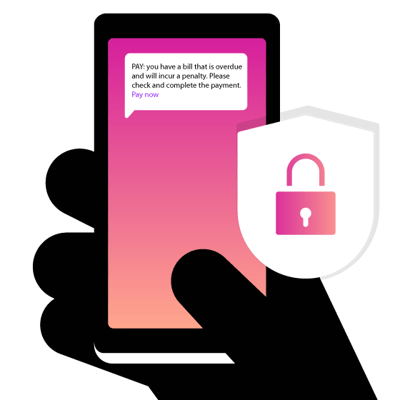 Fight messaging fraud with Vonage Fraud Defender
Verify API: Smart authentication meets carrier intelligence
Vonage Verify API is a flexible and powerful two-factor authentication solution designed for real-world fraud challenges. It helps businesses verify users with minimal friction, maximum reliability, and built-in intelligence that adapts to risk in real time.
At its core, Verify is an omnichannel 2FA API. It lets you authenticate users through multiple channels like SMS, RCS, voice, email, WhatsApp, and more. If one channel fails or is delayed, the API automatically switches to the next best option. That smart failover logic helps maximize delivery and conversion rates without requiring extra development work.
What makes Vonage Verify API especially effective is how well it leverages carrier-level data. By using real-time SIM verification, it enables silent authentication. This confirms a user has access to their mobile device without requiring them to enter a code. The verification happens directly with the mobile network, quietly in the background, keeping the experience seamless for the user.
This matters because traditional 2FA channels like SMS are increasingly targeted by fraud. SMS pumping attacks and social engineering scams can drive up costs and introduce risk. By using network-level checks to silently authenticate users, Verify helps stop these attacks before they start.
It also allows for risk-adjusted 2FA. Not every user or transaction carries the same level of risk. Verify gives you the flexibility to increase authentication strength when signals show something is off, or keep the experience simple when the user looks safe.
From a business perspective, Verify API is also efficient. It uses a pay-per-success pricing model, which means you only pay when a verification is completed. That makes it more predictable and cost-effective compared to flat-rate or channel-based pricing.
With Verify API, you can strengthen your authentication process without adding complexity. You can move fast without losing control. And you can meet users where they are, using channels they trust.
Adding smart fraud filters without adding steps: That is the value of Vonage Verify API.
Practical use case: Scoring mobile users at checkout
Let’s walk through how real-time mobile identity risk scoring works during a high-value transaction.
Imagine a customer is about to make a large payment through your app or platform. On the surface, everything looks normal. The phone number is familiar, the login credentials are correct, and there are no obvious red flags.
But before the payment is approved, your system makes a call to Vonage Identity Insights API.
Behind the scenes, several quiet checks begin. The system asks a couple of important questions:
Has the SIM card associated with this number been recently swapped?
Is the mobile subscriber still the same person who signed up?
If the answers point to possible fraud, the system responds instantly. It triggers a step-up authentication, such as sending a one-time passcode over WhatsApp or fallback to another channel like voice or email. The transaction is paused just long enough to verify the user in a way that matches the level of risk.
But if everything checks out and the risk level is low, the user continues without interruption. Silent authentication confirms their identity in the background. The payment goes through. The experience is smooth. The user never knows there was a risk check at all.
The result is a smarter balance between security and user experience. You stop fraudulent payments before they happen. You avoid blocking legitimate users with unnecessary steps. And you protect both revenue and trust in one seamless flow.
This is what modern fraud prevention should look like. Real-time signals. No friction. Right-sized security based on what is actually happening in the moment.
Use cases by risk stage
Fraud risk does not show up in just one part of the user journey. It can emerge at any point — from account creation to payment execution. The power of Vonage Identity Insights and Verify API lies in their ability to respond differently based on where and when the risk appears.
Here is how they work together across key moments in the user experience:
Stage
Identity Insights Role
Verify API Role
Account sign-up
Validates the phone number and checks if it belongs to a real mobile subscriber
Sends a two-factor authentication request using the user’s preferred channel such as SMS, WhatsApp, or email
Password reset
Checks for recent SIM swap activity that could signal an account takeover attempt
Triggers an extra layer of authentication through OTP or silent verification to confirm device ownership
Payment initiation
Supplies real-time mobile signals such as subscriber match; these data points can be evaluated by your own risk engine to assess transaction risk
Adjusts the authentication method based on the level of risk without disrupting the user experience
Account recovery
Flag potentially suspicious recovery attempts by filtering out invalid numbers
Falls back to alternate verification channels if the primary method is blocked or delayed
This layered approach ensures that every touch point is protected in a way that matches the situation. You can apply stronger checks when needed, keep things seamless when risk is low, and build a security strategy that actually adapts to each user’s context.
Network-level risk signals: An untapped fraud layer
Most fraud tools rely on what users do inside the app or browser. They look at device fingerprints, IP addresses, or behavioral patterns. While useful, these signals are limited. They can be manipulated. They can be spoofed. And they only tell part of the story.
Network-level risk signals go deeper. They come directly from mobile carriers, not from the device or browser. This data lives at the infrastructure level and reflects what is actually happening to a user’s phone number in real time.
Because these signals come from the telecom network, they cannot be faked by malware, browser extensions, or bots. They offer a layer of visibility that is incredibly hard for attackers to bypass.
Here are some of the key signals used in this approach:
Number recycling
It is a common vector for fraudsters to exploit when businesses unknowingly authenticate or communicate with the wrong person using a recycled number. By verifying whether a number has changed ownership since a specified date, it helps prevent account takeovers, misdirected communications, and identity fraud before they occur.SIM swap timestamps
Knowing exactly when a SIM was last changed helps detect whether the number has been taken over by someone else. If a swap happened within the last few hours, that may be enough reason to pause a transaction or ask for additional verification.
These network-level insights are invisible to traditional fraud tools. But they can play a crucial role in spotting threats that other systems miss.
Vonage takes this a step further by integrating these signals with AWS Bedrock, enabling AI-driven scoring at scale.
This allows businesses to build risk models that learn over time and adjust to new fraud patterns automatically. Instead of writing static rules, you can let the data do the work and adapt in real time.
This is what makes network-level scoring so powerful. It does not rely on what a user tells you or how their device behaves. It gives you the actual truth from the carrier itself.
Integrating risk scoring into your payment flow
Adding real-time identity risk scoring to your payments workflow does not have to be complex. With Vonage APIs, integration is straightforward. You can plug directly into your existing fraud engine or authentication logic with minimal effort.
It starts with a single API call. That one request gives you live insights from the mobile network, including SIM swap history and subscriber match results. You do not need to manage multiple data sources or build out new infrastructure. Everything is available through one endpoint in order to build your own risk score.
This makes it easy to apply smarter decisions where they count. You can:
Trigger adaptive step-up rules
For example, apply stronger authentication only when risk is detected, rather than forcing every user through the same process.Run invisible background checks
Identity signals can be evaluated silently, without requiring input from the user or adding friction to the experience.Pre-screen high-value transactions
Use real-time insights to verify if the user’s device and subscriber profile are consistent with past behavior before allowing large payments to proceed.
The API is also designed to be flexible. You receive clear, actionable responses such as a timestamp of the last SIM change or a simple match result. These outputs can feed directly into your own risk scoring model or decision engine.
Whether you are working in fintech, ecommerce, banking, or digital identity, Vonage Identity Insights API gives you the tools to make better decisions at every step of the user journey. You control the logic. Identity Insights API delivers the intelligence.
How it compares: Traditional vs. carrier-based scoring
Not all fraud prevention is created equal. Traditional KYC methods still play a role, but they are no longer enough on their own. Static identity checks and legacy risk models miss key signals and often introduce more friction than necessary.
Here is how Vonage Identity Insights compares to traditional KYC:
Feature
Traditional KYC
Vonage Identity Insights
Real-time?
No live checks once the account is created
Continuously updates with live network signals
Adaptive to user behavior?
Fixed data that does not change
Responds instantly to changes like SIM swaps or subscriber mismatch
Uses carrier data?
Depends on self-reported or browser data
Pulls directly from telecom networks for verified insight
Reduces chargebacks?
Only catches obvious fraud, often after the fact
Flags suspicious behavior before money moves
Adds friction?
Requires manual steps or extra input
Runs silently in the background without slowing down the user
Carrier-based scoring gives you a level of visibility that legacy systems cannot. It allows you to make better decisions faster, reduce risk without disrupting your customers, and stay ahead of threats that evolve every day.
Outcomes and proof points
Mobile identity risk scoring is not just a promising idea. It is already proving its value in real-world environments where security, scale, and user experience all matter.
Vonage Identity Insights and Verify are trusted by fintech leaders to prevent fraud before it happens. In fact, Remitly, the largest independent digital remittance company in the U.S., reduced fraudulent transactions significantly by implementing Vonage SMS API with two-factor authentication. Their team reported savings of over $250,000 by preventing fraud before funds were sent, while still delivering secure, transparent updates to recipients across international borders.
Larger institutions are also integrating Vonage into their decision engines to block fraud based on telecom signals. These signals provide context that is invisible to browser or app-based models, allowing teams to trigger adaptive authentication with far greater accuracy.
Lydia Solutions also achieved measurable results by integrating Vonage Verify with Silent Authentication. The company saw an increase in conversion rates, a 50% reduction in latency compared to their previous solution, and a significant drop in fraud driven by OTP phishing and social engineering. With over 8 million users and plans to scale to 5 million more in France, Lydia needed authentication that could keep up with growth. Silent Authentication delivered.
Together, these examples show how Vonage’s identity and verification solutions help businesses reduce fraud while improving the customer experience. By using real-time mobile network signals rather than static data, fintech and payments providers are making smarter, faster decisions — before the money moves.
How to get started with identity risk scoring
Getting started with real-time mobile identity risk scoring is faster and easier than most teams expect. Vonage provides everything you need to begin integrating real-time fraud signals into your payment workflows without disrupting your existing infrastructure.
The process starts with one API. Identity Insights and Verify API work together through a single endpoint that delivers both real-time identity checks and adaptive two-factor authentication. You get full coverage across key user actions like signups, logins, password resets, and payment approvals. Vonage offers a number of solutions for your business to own your security.
Developers can test everything in a sandbox environment before pushing to production. Whether you want to validate SIM swap status, run subscriber match checks, or implement risk-based 2FA, the tools are already in place.
Documentation is clear, the setup is lightweight, and support is available if you need it. You are not rebuilding your fraud stack. You are enhancing it with deeper intelligence and better timing.
Stopping bad payments with carrier-based insights: That is the first step toward fraud prevention that actually keeps up with the way fraud works today.
Prevent fraud before it costs you
Today’s fraud landscape moves quickly. Attackers shift tactics in real time. Risk changes from one moment to the next. Relying on static rules and outdated KYC signals is no longer enough to protect payments and customer trust.
The most effective defense starts with a better understanding of who the user is at the time of the transaction. That means using real-time data that cannot be faked. It means checking directly with the mobile network to uncover silent signs of risk. It means moving from one-size-fits-all verification to a model that adapts to each user’s profile and behavior.
Not all users are equal. Know their risk before it costs you.
With Vonage Identity Insights and Verify API, you gain access to a layer of intelligence most fraud tools never see. You can detect SIM swaps, catch burner phones, verify subscriber identity, and adjust authentication without adding friction. You get to protect more revenue while improving the experience for legitimate users.
This is how modern fraud prevention should work: Smarter signals. Better timing. Less guesswork.
Explore Vonage Verify API documentation to get started in your own sandbox environment, or dive into Vonage Identity Insights API to see how real-time telecom data can strengthen your fraud strategy.
Sign up now
Was this helpful? Let's continue your API journey
Don't miss our quarterly newsletter to see how Vonage Communications APIs can help you deliver exceptional customer engagement and experiences on their favorite channels.

Thanks for signing up!
Be on the lookout for our next quarterly newsletter, chock full of information that can help you transform your business.
Still have questions about risk scoring in payments?
Real-time risk scoring in payments is the process of evaluating the fraud risk of a user or transaction at the moment it occurs. Unlike traditional fraud checks that rely on static KYC data, real-time scoring uses live signals — such as SIM swap detection and subscriber match — to determine whether a transaction is safe to approve.
Mobile identity data provides carrier-level insights that are nearly impossible to spoof. This includes real-time information like whether a SIM card was recently changed and if the phone number matches the subscriber. These signals help detect fraud patterns before traditional systems can react.
Carrier-based identity scoring uses telecom data to assess the trustworthiness of a mobile user. Instead of relying on cookies or device fingerprints, it queries the mobile network directly for signals such as porting history, SIM activity, and subscriber status. This approach allows for more accurate fraud detection and fewer false positives.
SIM swap detection is crucial because attackers often hijack mobile numbers by swapping the SIM to a device they control. This allows them to intercept OTPs, reset passwords, and complete fraudulent transactions. Real-time SIM swap checks help block these actions before any money is lost.
Vonage Identity Insights offers a single API that plugs directly into existing fraud engines or authentication flows. It delivers real-time identity signals with no added friction for the user. You can use it to trigger adaptive 2FA, perform silent risk checks, or pre-screen high-value transactions automatically.
Traditional KYC checks are static and often performed only once at account creation. Vonage risk scoring uses dynamic, real-time data from mobile carriers to continuously evaluate risk. This allows fraud teams to detect threats that emerge between login and transaction, providing stronger protection without added friction.
Yes. Vonage Identity Insights is designed to support real-time KYC and fraud detection in fintech, payments, and digital banking environments. It helps verify users silently and continuously, making it ideal for high-value transactions and regulated industries that require advanced identity checks.
Yes. Vonage Verify API supports SMS, voice, email, WhatsApp, RCS, and silent authentication. It also includes smart failover logic to automatically switch channels if one fails, maximizing delivery and conversion rates while minimizing fraud risk.