IVR Survey Success: 8 Best Practices To Achieve Actionable Insights
An IVR survey offers one of the most direct ways to gather customer feedback. When implemented effectively, these automated phone surveys deliver insights that can transform your customer experience strategy.
In this guide, we'll explore proven best practices that help you design engaging IVR surveys, craft effective questions, and analyze results for meaningful business impact. Discover how to overcome common pitfalls and leverage your IVR system to capture the voice of your customers when it matters most.

What is an IVR survey?
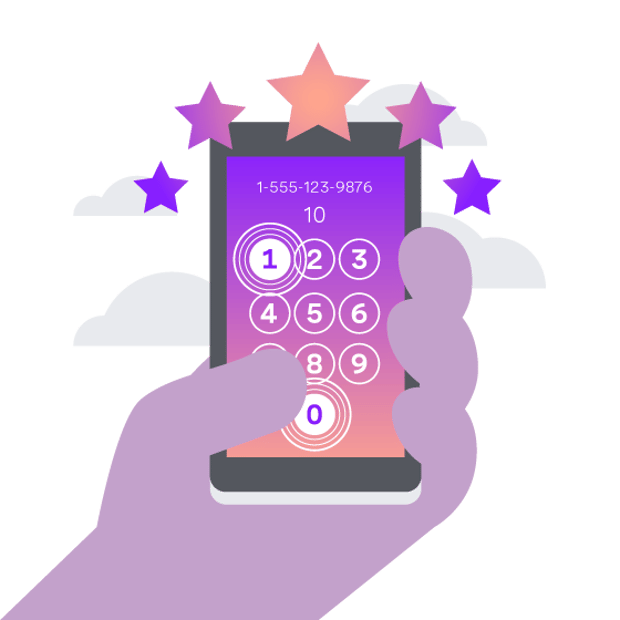
An IVR survey uses interactive voice response technology to collect customer feedback through automated phone interactions. When a customer calls your business or after they speak with an agent, the IVR system presents a series of questions that customers can answer using their keypad or voice responses.
IVR survey questions usually focus on customer satisfaction, agent performance, or specific aspects of the service experience.
The system works by guiding callers through pre-recorded prompts, collecting their responses, and storing the data for later analysis. Modern IVR surveys can adjust based on previous answers, creating a more personalized feedback experience that adapts to each customer's specific journey.
Unlike other feedback methods, IVR surveys capture reactions when experiences are fresh in customers' minds. They provide a direct channel for feedback without requiring customers to switch communication methods. This makes them particularly valuable for businesses with high call volumes or those focusing on phone-based customer interactions.
Benefits of IVR survey use
When implemented effectively, IVR surveys offer several advantages that make them valuable tools in your customer feedback strategy. These automated phone-based surveys can deliver meaningful insights while streamlining your feedback process.
Here are the key benefits of incorporating IVR survey solutions into your feedback program:
Immediate feedback collection: Capture customer opinions when experiences are fresh, leading to more accurate and emotion-driven responses that reflect true satisfaction levels.
Higher completion rates: Customers already on the phone are more likely to participate compared to email or web surveys that require channel switching.
Cost-effective implementation: Once established, IVR surveys run automatically without requiring staff resources for each interaction, making them economical for high-volume call centers.
Reduced bias: Customers often provide more honest feedback to automated systems than to live agents who just assisted them, resulting in more authentic insights.
Consistent delivery: Every customer receives identical question phrasing and tone, eliminating the variability that occurs with agent-conducted surveys.
Easy quantification: Numerical responses (like rating scales) are automatically compiled into actionable data sets that reveal trends and patterns.
Integration capabilities: Modern IVR customer satisfaction survey systems can connect with your CRM and other business tools, allowing you to correlate feedback with specific customer profiles or interactions.
Leveraging these benefits helps you create a more robust “voice of customer” program that captures insights at critical moments in the customer journey.
Drawbacks of IVR surveys
While IVR surveys offer significant benefits, they have limitations that might impact their effectiveness in certain situations. Understanding these challenges helps you implement more successful feedback programs and decide when to use alternative methods.
Here are the potential drawbacks to consider with IVR drawbacks:
Limited question complexity: The audio-only nature of IVR restricts you to simple, straightforward questions that customers can easily understand and answer through keypad entries or basic voice responses.
Survey fatigue: Customers who have just completed a potentially lengthy service call may be reluctant to spend additional time answering survey questions, leading to abandonment.
Lack of visual cues: Without visual elements to guide participants, customers may become confused about response options or the survey structure, particularly with longer questionnaires.
Response bias: Extremely satisfied or dissatisfied customers are more likely to complete IVR surveys, potentially skewing your results toward the extremes rather than capturing the middle ground.
Technical limitations: Background noise, poor connections, or voice recognition challenges can frustrate respondents and lead to inaccurate data collection in call transfer IVR survey implementations.
Reduced depth of insight: Open-ended questions, while possible, are more difficult to implement effectively in IVR formats, limiting the rich qualitative feedback you might gather through other methods.
Accessibility concerns: Some demographic groups, particularly older adults or those with hearing impairments, may struggle with automated voice systems.
By acknowledging these constraints upfront, you can design IVR surveys that minimize these drawbacks while maximizing their strengths.
Top IVR survey use cases
IVR surveys serve multiple purposes across different business scenarios. Understanding the most effective applications helps you implement them strategically for maximum impact.
Post-interaction customer satisfaction
After a customer completes a service call, an automated survey can measure their satisfaction with the interaction. These contact and call center IVR survey tools capture immediate reactions about agent performance, issue resolution, and overall experience while memories are fresh.
Questions normally focus on whether the customer's issue was resolved, how they felt about the agent's knowledge and courtesy, and their likelihood to recommend your service. This real-time feedback helps identify both service champions and situations requiring immediate follow-up.
Product and service feedback
Beyond measuring satisfaction with the call itself, IVR surveys can gather specific feedback about your products or services. This approach works particularly well after technical support calls or product inquiries.
You can ask targeted questions about feature usage, pain points, or desired improvements. The immediate nature of these surveys helps capture detailed impressions before they fade, providing valuable insights for product development teams.
‘Voice of customer’ program integration
Many businesses incorporate IVR surveys as one component of a comprehensive voice of customer strategy. These contact center IVR survey elements work alongside email, SMS, and web-based feedback tools.
This integrated approach ensures you capture feedback across multiple touchpoints and communication channels. The phone-based data offers a valuable counterpoint to digital feedback, often reaching customers who might not respond to other survey methods.
Process improvement identification
IVR surveys excel at pinpointing specific operational bottlenecks or service gaps. By asking targeted questions about different stages of the customer journey, you can identify exactly where processes break down.
This targeted feedback helps prioritize improvement initiatives for maximum impact. The structured nature of IVR responses makes it relatively easy to track progress as you implement changes.
Typical IVR survey response rates
IVR surveys consistently achieve higher response rates than other feedback methods, making them particularly valuable for gathering representative customer insights.
This higher participation stems from the convenience factor — customers are already on the phone and don't need to switch to a different channel. The immediacy also plays a role, as people can share feedback while the experience remains fresh in their minds.
Response rates tend to improve further when surveys are brief (under 2 minutes), clearly introduced, and positioned as opportunities for customers to influence service improvements.
These higher completion percentages provide more statistically significant data for decision-making, reducing the risk of acting on feedback from just a vocal minority.
 Vonage + Salesforce
8 IVR survey best practices for actionable insights
Creating effective IVR surveys requires strategic planning and thoughtful implementation. These best practices will help you maximize response rates and gather meaningful data that drives real business improvements.
1. Keep surveys brief and focused
Respect your customers' time by limiting your survey to 3-5 questions that take less than two minutes to complete. Completion rates drop dramatically after the two-minute mark.
Start with your most important questions, as many respondents abandon surveys partway through. Focus each question on a specific aspect of the customer experience rather than trying to assess everything in a single survey.
2. Time your survey strategically
Offer the IVR survey immediately after the interaction while the experience remains fresh. This timing captures more accurate emotional responses and detailed feedback.
For service calls that require post-interaction work (like processing a return or researching a technical issue), consider scheduling a follow-up survey after resolution. This approach ensures you measure the complete experience, not just the initial conversation.
3. Set clear expectations upfront
Begin your survey with a brief introduction explaining its purpose and length. For example: "To help us improve our service, we'd like your feedback on your call today. This will take less than 90 seconds."
This transparency increases participation rates and reduces mid-survey abandonment. Customers appreciate knowing exactly what they're committing to before they begin.
4. Use consistent rating scales
Standardize your measurement scales across all IVR survey questions. A consistent 1-5 or 1-10 scale helps respondents answer quickly and accurately.
Clearly define what each number represents at the beginning of your survey. For example: "For the following questions, please rate your experience from 1 to 5, where 1 is very dissatisfied and 5 is very satisfied."
5. Include one open-ended question
While multiple-choice questions are easier to analyze, including one open-ended question captures insights you might not anticipate. Place this question near the end of your survey.
Keep the prompt simple and specific: "Please briefly describe what we could have done better today." These responses often reveal your biggest opportunities for improvement.
6. Design for action
Create survey questions directly tied to specific business processes or touchpoints you can influence. Generic satisfaction questions provide less actionable feedback than targeted inquiries.
For example, instead of asking "How was your experience?" ask "How would you rate the clarity of the information you received today?" This specificity points directly to areas you can improve.
7. Test before launching
Conduct thorough testing with internal staff before deploying your IVR survey questions to customers. This practice helps identify confusing prompts, technical issues, or survey flow problems.
Have testers evaluate both the content and the technical experience, including voice clarity, response recognition, and timing. Small adjustments often make significant differences in completion rates.
8. Close the feedback loop
When customers provide feedback, especially negative responses, follow up promptly. This response demonstrates that you take their input seriously.
Implement a system that flags low scores for immediate review and potential outreach. This closed-loop approach not only resolves individual issues but also builds loyalty by showing customers their voice matters.
Is it worth using IVR survey software?
Dedicated IVR survey software significantly streamlines the implementation and management of your feedback program. These specialized tools offer intuitive interfaces that let you create, deploy, and analyze surveys without technical expertise.
Most modern solutions integrate seamlessly with your existing contact center technology, allowing for automatic survey triggers following customer interactions. This integration eliminates manual processes and ensures consistent deployment.
The analytics capabilities of specialized IVR software transform raw responses into actionable insights. Instead of struggling with spreadsheets, you get visualization tools that highlight trends, flag critical issues, and track improvements over time.
IVR survey question examples to get you started
Creating effective IVR survey questions requires balancing simplicity, clarity, and analytical value. Your questions must work in an audio-only format while still gathering meaningful insights that drive improvements.
Here are sample IVR survey questions organized by question type that you can adapt to your specific needs:
Customer Satisfaction (CSAT) questions
"On a scale from 1 to 5, where 5 is very satisfied, how would you rate your overall experience today?"
"How satisfied were you with the resolution provided? Press 1 for very dissatisfied through 5 for very satisfied."
These straightforward questions measure immediate satisfaction and work well as opening questions in most surveys.
Net Promoter Score (NPS) questions
"On a scale from 0 to 10, how likely are you to recommend our service to a friend or colleague?"
"Based on today's experience, how likely would you be to use our service again in the future? Please respond with a number from 0 to 10."
NPS questions help predict customer loyalty and growth potential. Place these toward the middle of your survey for best results.
Agent performance questions
"Rate the knowledge level of the representative who assisted you today, with 1 being not knowledgeable and 5 being extremely knowledgeable."
"How well did our agent listen to your concerns? Press 1 for poor through 5 for excellent."
These questions provide actionable feedback for coaching specific skills and recognizing top performers.
Process efficiency questions
"Was your issue resolved on this call? Press 1 for yes or 2 for no."
"How would you rate the ease of getting your issue resolved today, with 1 being very difficult and 5 being very easy?"
These examples help identify operational bottlenecks that might be frustrating your customers.
Open-ended question examples
"After the tone, please briefly share what we could have done better today."
"Please tell us in a few words what you most appreciated about today's service."
Limit your survey to one open-ended question, positioned near the end, to capture unexpected insights without creating survey fatigue.
When crafting your own IVR survey questions examples, aim for neutral wording that doesn't bias responses. Avoid complex language, double negatives, or questions that combine multiple concepts. Keep your rating scales consistent throughout the survey to prevent confusion.
Note that customers respond to IVR surveys using keypads or voice recognition, so each question must work well in an audio format with clear response instructions.
Using an IVR survey: Final thoughts
Customer feedback only matters when you act on it. IVR surveys bridge the gap between hearing customer voices and implementing meaningful changes that impact your bottom line.
Focus on creating brief, targeted surveys that respect customer time while generating insights you can immediately apply. Balance quantitative metrics with qualitative feedback to get the complete picture.
Transform your customer feedback strategy today with Vonage Contact Center, and harness the power of intelligent IVR solutions that deliver the insights your business needs to thrive.
Sign up now
Want to know more about this (and other) topics?
Don't miss our quarterly newsletter for the latest insights into how our Unified Communications and Contact Center solutions can enhance your business and even work together to take communication to new levels.

Thanks for signing up!
Be on the lookout for our next quarterly newsletter, chock full of information that can help you transform your business.
Still have questions about IVR surveys?
IVR optimization is the process of refining your interactive voice response system to improve customer experience and survey completion rates. This includes streamlining menu options, enhancing voice clarity, reducing wait times, and personalizing interactions based on customer data.
Yes, open-ended questions can be valuable in IVR surveys, but should be used sparingly. Limit yourself to one open-ended question per survey, usually placed near the end.
While post-call surveys are most common, IVR surveys can be effective at other touchpoints too. Consider using them for appointment confirmations, transaction follow-ups, or after self-service interactions.