The Rich Messaging Experience for Financial Product Marketing
Financial product marketers face a growing challenge: stand out in a saturated digital space while building trust and driving conversions.
A rich messaging experience offers a compelling solution, using branded, interactive messaging to transform static campaigns into engaging conversations.
Powered by RCS business messaging, this format allows banks, insurers, and fintech firms to send videos, calculators, forms, and verified branding directly within a customer’s native messaging app, no downloads needed.
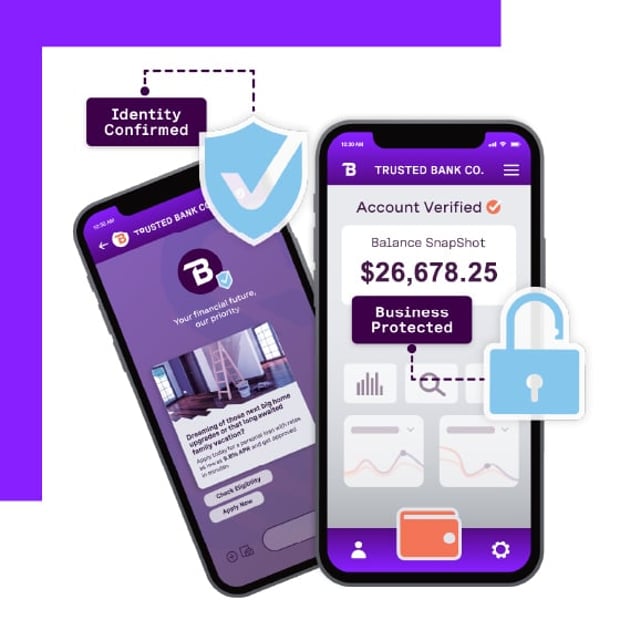
-
1.
-
2.
-
3.
-
4.
-
5.
-
6.
-
7.
-
8.
What is a rich messaging experience?
A rich messaging experience upgrades the standard SMS interaction into a dynamic, visually engaging, and interactive conversation. It replaces static text messages with immersive formats that resemble the fluidity of apps like WhatsApp or iMessage, yet work directly within a user’s native messaging app, without requiring any downloads or third-party tools.
Enabled by Rich Communication Services (RCS), this experience includes features that make each message feel personalized, professional, and purpose-built for engagement. For financial services teams, this opens up a new channel that can drive higher product conversion, customer education, and trusted communication.
Rich messaging feature highlights
Multimedia content. Send high-quality images, videos, and voice clips to visually explain financial products, processes, or offers.
Real-time interaction indicators. Typing bubbles and read receipts let you track engagement and time responses more effectively.
Interactive content. Use quick-reply buttons, embedded CTAs, and swipeable carousels to present calculators, offers, or onboarding options.
Group messaging. Engage multiple stakeholders, such as customers, co-signers, or advisors, in a single, cohesive thread.
Verified branding. Reinforce trust with sender verification and recognizable branding elements like logos and color schemes.
Professional layout and design. Deliver messages with clean, consistent formatting that matches your institution’s voice and visual identity.
Business impact of rich messaging
Improved user experience. Messages are clearer, more visual, and more relevant, boosting customer satisfaction and retention.
More effective campaigns. Built-in analytics and higher open rates than email allow for more strategic and measurable communication.
Stronger engagement. With some RCS campaigns seeing interaction rates up to 35x higher than email, financial marketers can drive real action, whether that’s form completion, video viewing, or starting an application.
Frictionless conversion. Rich messaging can embed forms, product selectors, and even payment options directly within the chat, making the path from interest to action shorter and more seamless.
Feature
SMS
Rich Messaging (RCS)
Message format
Plain text only
HTML or text
Media, buttons, carousels
Engagement rate
Moderate
Low
Very high (up to 35x email)
Requires internet?
No
Yes
Yes
Interactivity
None
Limited
Embedded actions, forms
Branding capabilities
Minimal
Custom HTML
Verified sender, logos, colors
Ideal for financial products
Limited
Yes, but passive
Yes, with active engagement
Why financial product marketers need a messaging upgrade
Financial products are rarely impulse buys. Whether you're promoting a new savings account, life insurance plan, or mortgage tool, customers weigh these decisions carefully, often with skepticism. That means static email blasts or generic SMS campaigns are no longer enough to drive trust or action.
A rich messaging experience meets this moment by allowing financial marketers to deliver campaigns that inform, reassure, and guide users through key decisions. With RCS business messaging, institutions can embed interactive calculators, educational videos, and sign-up forms directly in the messaging thread. It’s the difference between telling someone they can save more, and showing them how, in real time, without leaving the app.
This matters because today’s customers are conditioned by app-based experiences. They expect tap-to-act simplicity, mobile-optimized layouts, and verified branding to feel secure when making decisions. Rich messaging delivers on these expectations while preserving compliance guardrails, thanks to built-in sender verification, message-level analytics, and default opt-in mechanisms.
For financial product marketers, this shift isn’t just about adopting new tech, it’s about upgrading communication to match the weight and complexity of the decisions customers are making. The result: more engagement, better qualified leads, and higher conversion on financial product campaigns.
How RCS messaging empowers your financial campaigns
Rich messaging powered by RCS isn’t just a cosmetic upgrade, it creates new strategic opportunities for financial marketers to educate, engage, and convert. Let’s break down three key campaign use cases where RCS messaging delivers measurable value in financial services.
Educating skeptical audiences
Financial products are often misunderstood. Whether it’s an unfamiliar insurance term or confusion over interest rates, education is a critical part of conversion. RCS lets you send short, personalized video explainers, swipeable FAQs, or even interactive tools that walk users through comparisons or benefit calculations.
Because messages arrive through the native texting app, there’s less resistance to opening them, and more opportunity to deliver value without overwhelming the recipient. Verified branding reassures users that the message is authentic, especially critical when covering sensitive financial topics.
Embedding forms, calculators, and media into your chats
RCS campaigns can host fully interactive experiences right within the chat. This includes:
Pre-filled sign-up forms tailored to the user’s profile
Mortgage or retirement calculators that return estimates on the spot
Educational videos that explain a new policy, offer, or regulatory update
Real-time survey buttons to gather data on customer needs
Unlike traditional SMS, these elements are actionable within the thread — no redirects, no downloads, no broken mobile pages. That means less friction and more conversions, especially when paired with a compelling offer or CTA.
Balancing personalization and compliance
Marketing financial products requires a careful balance between relevance and regulation. RCS helps marketers walk this line by offering:
Pre-approved content blocks that reduce risk
Verified sender identity for trust and deliverability
Message-level metrics to monitor interaction and engagement
Fallback to SMS when RCS isn’t available, ensuring reach
This enables marketers to personalize experiences within a secure, compliant framework. You can greet returning users by name, tailor the offer to their location or life stage, and still maintain the security posture required by your legal and compliance teams.
Hypothetical use cases in financial marketing
Rich messaging shines brightest when applied to real, high-stakes customer journeys, and few industries require more trust and precision than finance. Below are some possible practical examples of how RCS-powered campaigns could be used across the financial services landscape.
Insurance onboarding via secure messaging
A national insurance provider could use RCS to walk new policyholders through onboarding. After a customer purchases coverage, they would receive a message with:
A short video explaining their policy
A swipeable carousel breaking down coverage tiers
A quick-start checklist with a one-tap link to upload documents
This could reduce inbound support calls and accelerate time-to-compliance, while giving customers a branded, reassuring experience.
Mortgage calculators embedded in RCS campaigns
A regional credit union could pilot an RCS campaign targeting first-time homebuyers. Prospects would receive an interactive message with:
A branded header and verified sender badge
An in-thread mortgage calculator
Buttons to speak with a loan officer or schedule a consultation
With no app downloads or web redirects, engagement should jump significantly. Users would appreciate seeing estimated payments without leaving their messaging app.
Retirement planning through video-driven education
A fintech retirement platform could launch a campaign focused on Gen X users approaching their peak earning years. Using RCS, they could send:
A video preview of their smart planning dashboard
A customer testimonial in video format
Suggested action buttons to start their plan or speak with an advisor
This messaging approach should bridge the awareness-to-action gap and outperform their prior email-based campaigns by a wide margin.
Insight: Embedding interactivity directly into the messaging thread reduces bounce rates and builds confidence. Customers stay in control of the experience, a key advantage in trust-heavy industries like finance.
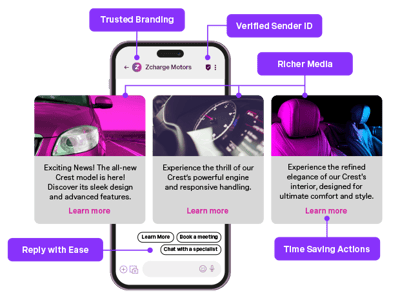 Customer Engagement
Privacy and trust in interactive messaging
In financial marketing, every message carries weight. It’s not just about capturing attention; it’s about earning and maintaining trust. Rich messaging, when used strategically, can support privacy and compliance while improving the customer experience.
Why trust is non-negotiable nowadays
Customers are increasingly skeptical of digital communication, especially when it involves their money. Phishing scams, spam messages, and unknown senders have conditioned users to ignore or block anything that doesn’t look immediately trustworthy. In regulated industries like banking and insurance, this skepticism can derail otherwise effective campaigns.
That’s where verified RCS messaging changes the game.
Built-in trust signals
RCS supports verified sender identities, similar to a blue checkmark. Your brand’s name, logo, and colors appear natively within the message thread, helping customers recognize the sender instantly and reducing the chance they’ll ignore or report the message.
Coupled with clean formatting and professional design, these elements signal that the message is legitimate, secure, and aligned with industry expectations.
Consumers notice the difference, too. Nearly seven in 10 consumers say they feel more comfortable interacting with financial service providers through RCS than through traditional messaging formats. That confidence stems from clearer sender identity, branded visuals, and a more app-like experience that reduces the friction, and suspicion, associated with unfamiliar outreach.
Enhanced privacy and secure delivery
Modern rich messaging protocols like RCS offer several built-in features that support trust and data protection:
Verified sender identities that help customers distinguish legitimate messages from scams
Secure message transport with automatic fallback to SMS if RCS isn’t available
Opt-in support and message-level tracking to ensure campaigns respect user permissions
Structured templates and branding controls to reduce risk of misinformation or misinterpretation
While end-to-end encryption isn't yet standardized across all RCS implementations, the format still provides a major upgrade over SMS in terms of both security and accountability. For financial institutions navigating compliance concerns, this makes rich messaging a safer, more strategic choice for digital outreach.
Pro tip: Set the tone early. Your first message should clearly identify your organization, explain the purpose of the message, and include a way to verify authenticity or opt out.
How to enable rich messaging in financial services
Deploying a rich messaging experience in a regulated industry requires more than just tech, it takes the right infrastructure, strategy, and safeguards to make it work at scale.
Here’s how financial institutions can lay the foundation for interactive, trusted, and measurable messaging programs using RCS and similar protocols.
Step 1: Upgrade from SMS to RCS using trusted infrastructure
The first step is adopting a platform that supports Rich Communication Services (RCS). Unlike traditional SMS, RCS operates over internet protocols, enabling media-rich features like image carousels, embedded forms, and interactive buttons. With growing support across Android and iOS devices, RCS is quickly becoming the default for modern messaging.
Vonage offers RCS capabilities through its Messages API, allowing institutions to upgrade from SMS without rebuilding their entire messaging strategy. Built-in fallback to SMS ensures message delivery even when RCS isn’t available on a user’s device.
Step 2: Add interactivity through embedded components
What makes rich messaging effective is its interactivity. Leading platforms allow you to embed:
Sign-up forms, pre-filled for return users
Educational videos tailored to product type or user segment
Calculators for mortgages, retirement plans, or premiums
Quick-action buttons for scheduling calls, downloading documents, or starting applications
Vonage Conversational Connect tools offer plug-and-play templates to simplify this process, allowing campaign teams to launch and iterate without heavy development cycles.
Step 3: Automate, test, and optimize
To drive consistent performance, marketing teams need to:
A/B test messaging variations across formats, time slots, and audience segments
Use analytics to track reads, clicks, and conversions
Automate journeys using visual builders or APIs that trigger messages based on behavior or lifecycle stage
Vonage RCS capabilities are part of a broader CPaaS infrastructure, supporting these needs at enterprise scale and offering integration with other channels like WhatsApp, Messenger, and voice.
Common mistake: Don’t assume RCS is just SMS with pictures. Without structured journeys, clear conversion paths, and proper analytics, rich messaging loses its impact. Treat it like a new campaign medium, not just a channel upgrade.
Elevate your financial product marketing with rich messaging
For financial marketers, static campaigns and generic messaging can’t keep up with today’s mobile-first expectations. A rich messaging experience bridges the gap between traditional outreach and modern consumer behavior, offering interactive tools, embedded education, and verified trust signals all within a native, compliant channel.
With RCS and other advanced messaging formats gaining traction across both Android and iOS, now is the time to upgrade your customer engagement strategy. Whether you're promoting a new financial product, simplifying onboarding, or guiding customers through complex decisions, rich messaging gives you the tools to connect more personally, convert more effectively, and scale more confidently.
And if you’re interested in exploring how Vonage messaging solutions pair with branded calling and other personalized engagement that will take customers from unread to must-read, then it’s time to Own Your Brand.
Sign up now
Was this helpful? Let's continue your API journey
Don't miss our quarterly newsletter to see how Vonage Communications APIs can help you deliver exceptional customer engagement and experiences on their favorite channels.

Thanks for signing up!
Be on the lookout for our next quarterly newsletter, chock full of information that can help you transform your business.
Frequently asked questions about rich messaging experience
SMS is limited to plain text and has a 160-character cap. A rich messaging experience, enabled by RCS, supports high-resolution media, branded layouts, interactive buttons, and read receipts, all within a user’s default messaging app.
Yes. RCS supports verified sender identity, encrypted message transport, and structured opt-in mechanisms. While end-to-end encryption is still evolving, current implementations offer significantly stronger trust and delivery controls than SMS.
With RCS-enabled APIs or messaging platforms, you can embed interactive components directly within the message thread. These include mortgage calculators, policy estimators, or pre-filled application forms that users can complete without leaving the chat.
Yes, as of iOS 18 and going forward, Apple has started supporting RCS messaging. This allows businesses to reach both Android and iOS users with a unified rich messaging experience across platforms.
Interactive messaging reduces friction in the user journey. With media, CTAs, and forms embedded directly in the message, customers can learn, compare, and act in one seamless flow, leading to higher conversion rates and stronger engagement.
Rich messaging platforms provide analytics like read rates, button clicks, form completions, and drop-off points. This data helps marketers refine campaigns and align messaging with user behavior.
Yes, when implemented through verified messaging providers and structured opt-in frameworks. Messaging platforms can be configured to meet GDPR, CCPA, and other data privacy standards, especially in highly regulated sectors like finance.