What Is SIP Trunking and How Does It Work?
Session Initiation Protocol (SIP) trunking enables businesses to replace outdated phone lines with cloud-based, internet-delivered voice, video, and messaging services.
It connects on-premises PBX systems to the Public Switched Telephone Network (PSTN) through virtual “trunks,” delivering scalable communication without the limitations of physical infrastructure.
SIP trunking supports everything from remote work to global voice coverage, with flexible pricing, elastic capacity, and built-in resilience. AI-powered features like virtual agents and voice analytics further extend its capabilities, offering greater control and context in customer engagement.
-
1.
-
2.
-
3.
-
4.
-
5.
-
6.
-
7.
-
8.
What is SIP trunking?
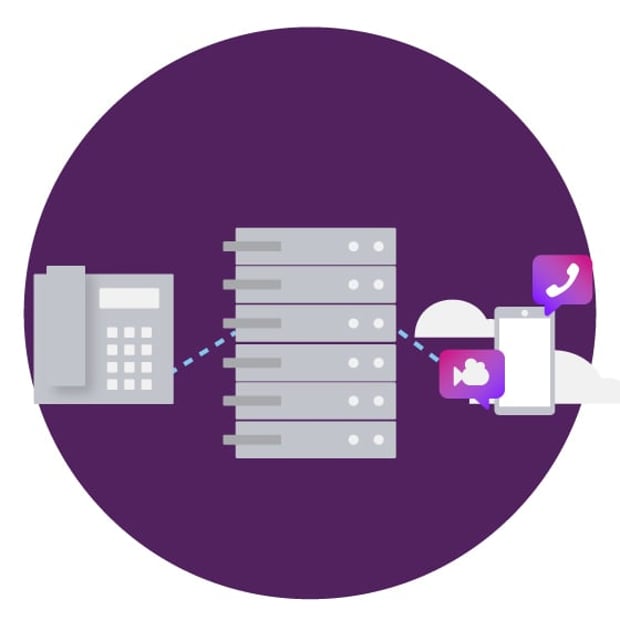
Session Initiation Protocol (SIP) trunking is a modern communication method that delivers voice, video, and messaging services over the internet instead of traditional copper phone lines. A SIP trunk acts as a virtual connection between your private branch exchange (PBX) and the public switched telephone network (PSTN), replacing physical circuits with flexible, cloud-based communication.
By converting voice into digital packets, SIP trunking routes calls through your internet connection using standardized internet protocol. This approach supports voice calls, video conferencing, and messaging while remaining compatible with both legacy and IP-based phone systems.
How it works
SIP trunking converts analog voice into digital data packets that can be transmitted across an internet connection.
It uses Session Initiation Protocol (SIP) to manage call setup, control, and termination for voice and video sessions.
Virtual trunks replace physical phone lines by grouping multiple communication channels into scalable, software-based connections.
The SIP trunk connects your PBX system to external phone networks, enabling inbound and outbound calls over the internet.
Key benefits
SIP trunking reduces costs by removing the need for physical phone lines and lowering long-distance and carrier-related charges.
It enables scalability and flexibility by allowing businesses to add or remove call capacity instantly without hardware changes.
SIP trunking supports modernization by integrating with cloud platforms, IP-based PBX systems, and programmable voice capabilities.
It enables remote work by allowing employees to make and receive calls from any location with a stable internet connection.
SIP trunking improves business continuity through redundancy and automatic call rerouting during outages or disruptions.
How SIP trunking functions in practice
While the fundamentals of SIP trunking involve converting analog voice into digital data and routing it over the internet, real-world implementation requires a set of coordinated components and capabilities that ensure stability, scalability, and call quality across diverse environments.
SIP trunking replaces physical phone lines with virtual voice channels delivered over an internet connection, but what makes it work smoothly at scale is the underlying architecture and intelligent routing behind the scenes.
Core components of SIP trunking
Private branch exchange (PBX). The PBX is your internal phone system, which manages call routing, extensions, voicemail, and user management within your organization. SIP trunking connects your PBX to the outside world.
Internet telephony service provider (ITSP). This provider handles the SIP trunk service, routing your outbound and inbound calls between your PBX and the public switched telephone network (PSTN).
Session border controller (SBC). SBCs act as traffic managers and security guards for SIP-based communication. They regulate voice quality, provide encryption, prevent fraud, and manage failover during outages.
SIP channels and trunks. A SIP channel supports one concurrent call, inbound or outbound. Multiple channels are grouped into a SIP trunk, which flexibly scales to meet your communication load.
Network infrastructure. High-speed, reliable internet connectivity with appropriate bandwidth and QoS (quality of service) settings is critical to maintaining call clarity and performance.
What makes elastic SIP different?
Traditional SIP trunks often require manual provisioning and fixed capacity planning. Elastic SIP, such as what Vonage offers, automatically scales call capacity up or down in real time based on actual usage. This eliminates the need to forecast call volumes or overpay for unused channels.
Elastic SIP also simplifies geographic expansion. With Vonage, for example, you can provision global phone numbers, enable local presence in multiple countries, and route calls through the nearest cloud gateway, reducing latency and improving reliability.
Benefits of SIP trunking for business
SIP trunking offers more than just an upgrade from traditional telephony, it directly supports operational agility, cost optimization, and long-term scalability. Whether you're running a local contact center or managing global communications, these benefits make SIP a strategic choice for modern businesses.
Cost efficiency and ROI
SIP trunking reduces communication costs by eliminating the need for physical lines and minimizing long-distance charges. Businesses typically move away from bundled PRI (Product/Service bundling) or analog services and pay only for the number of SIP channels they use. With elastic SIP, this pricing becomes usage-based, so your communication spend scales with your actual call volume.
In addition, SIP trunks reduce hardware and infrastructure management costs. Many providers, like Vonage, eliminate the need for local carrier contracts and reduce dependency on international carrier agreements for call origination and termination, simplifying billing and vendor management while increasing transparency.
Cloud integration and modernization
Unlike legacy systems that rely on hardwired infrastructure, SIP trunking integrates easily with cloud platforms, VoIP-enabled PBXs, and unified communications solutions. This allows your organization to adopt cloud telephony at your own pace, without disrupting existing systems.
Vonage SIP Trunking, for example, enables fast provisioning through a self-service dashboard, AI-enhanced engagement, and integration with programmable voice features, such as voice bots, speech recognition, and WebRTC endpoints. This gives teams the ability to modernize workflows without losing control of their telephony stack.
Disaster recovery and failover
Built-in redundancy is a core advantage of SIP trunking. In the event of a power outage, natural disaster, or hardware failure, call routing can be automatically redirected to backup locations, mobile phones, or cloud-based endpoints. This ensures your business stays connected, without depending on a single point of failure.
With SIP, geographic diversity is also easier to manage. Calls can be routed through multiple data centers or regions based on proximity, improving both uptime and call quality while reducing the risk of service disruption.
Security and compliance
Modern SIP trunking includes advanced security features to protect against fraud, unauthorized access, and service abuse. Session border controllers, encryption protocols, and IP-based access restrictions help safeguard communications without compromising speed or quality.
Some providers also offer compliance-ready features such as call recording controls, customizable retention policies, and support for regulations like HIPAA or GDPR, critical for industries like healthcare, finance, respectively.
 Network APIs vs. Fraud
How much does SIP trunking cost?
SIP trunking pricing varies based on provider, capacity needs, international calling requirements, and whether you choose a traditional or elastic model. Unlike legacy phone systems that lock you into fixed circuit bundles, SIP trunking offers flexible pricing designed around real-world usage.
Most providers charge on a per-channel basis, meaning you only pay for the number of simultaneous calls your business requires. This gives you tighter control over communication spend, especially during seasonal fluctuations or periods of rapid growth.
Elastic SIP models, like those offered by Vonage, allow you to scale call capacity on demand, paying only for what you use. There’s no need to pre-provision lines or overcommit to capacity. Additional costs may apply for premium features such as voice API access, AI-powered routing, or enhanced compliance tools.
Some of the typical SIP trunking cost components include:
A setup or activation fee (often waived or bundled)
Monthly recurring charges per SIP channel
Call rates based on destination (local, long-distance, international)
Optional features like call recording, analytics, or enhanced routing
Charges for outbound PSTN connections (often based on call type and country)
With the right provider, SIP trunking can significantly reduce total cost of ownership (TCO) compared to legacy systems, especially when factoring in maintenance, hardware, and carrier consolidation across regions.
SIP trunking vs. VoIP
While often used interchangeably, SIP trunking and VoIP (Voice over Internet Protocol) refer to different parts of the internet-based communication stack.
VoIP is the broad term for technologies that enable voice communication over internet connections instead of traditional phone lines. Any service that allows you to make calls using a broadband connection, whether it’s a consumer app or an enterprise platform, falls under the VoIP category.
SIP trunking is a specific method used to deliver VoIP. It connects your business’s on-site or cloud-based PBX to the public switched telephone network (PSTN) using the SIP protocol. In this sense, SIP trunking is the bridge that enables VoIP calls to reach standard phone numbers outside your internal network.
Here’s how they differ in function:
Feature
SIP Trunking
VoIP
Definition
Delivery method for voice/data via SIP trunks
General term for voice over internet
Scope
Connects PBX to PSTN using SIP
Any internet-based voice communication
Media supported
Voice, video, messaging
Primarily voice
Use case
Enterprise-grade connectivity
Consumer apps or business phone systems
Flexibility
Scalable and programmable
Varies by provider
Bottom line: SIP trunking is how businesses enable VoIP at scale - with more control, reliability, and integration flexibility than basic VoIP services alone.
What to look for in a SIP trunk provider
Choosing the right SIP trunking provider goes beyond pricing. Your business depends on consistent, high-quality voice connections, seamless scaling, and integrations that align with your existing infrastructure and future growth plans. Here are the key capabilities to evaluate:
Reliability and uptime
Look for a provider with a geographically redundant network and automatic failover capabilities. These features help ensure business continuity during outages or maintenance. Enterprise-grade providers typically offer uptime guarantees of 99.9% or higher, backed by service level agreements (SLAs).
Call quality and geographic coverage
Call clarity depends on global network reach, regional points of presence, and optimized routing. Ensure the provider can support both local and international numbers, with low latency and jitter. Vonage, for example, offers inbound number coverage in 70+ countries with intelligent routing for outbound calls.
PBX and platform compatibility
Your provider should support SIP trunking for on-premises, hybrid, or cloud PBX systems. Compatibility with platforms like Asterisk, FreePBX, 3CX, Cisco, and Microsoft Teams ensures a smooth setup without needing to overhaul your telephony environment.
Elastic scalability
The best SIP providers offer elastic trunking that scales automatically as demand fluctuates. Instead of pre-buying capacity, you gain real-time flexibility to add or remove channels without delays or contract changes.
Security and compliance
Look for built-in protection like encryption, fraud detection, session border controllers (SBCs), and access control by IP. If you operate in a regulated industry, ensure the provider supports compliance requirements such as HIPAA, SOC 2, or GDPR.
Self-service and analytics
A modern SIP dashboard should allow you to provision, monitor, and manage trunks easily. Tools like Vonage Voice Inspector offer visibility into call quality and help troubleshoot issues quickly without opening a support ticket.
Programmable voice capabilities
If you're building custom experiences or embedding voice into apps, verify the provider supports programmable SIP. This unlocks advanced features like AI-driven call routing, speech-to-text and text-to-speech in multiple languages, call transcription, WebRTC integration, and API-based voice workflows.
Possible real-world examples of SIP trunking in action
The following scenarios are hypothetical but based on common use cases across industries. They illustrate how SIP trunking can address real business needs, from scalability to modernization, without referencing specific companies or proprietary results.
Example 1: Scaling a seasonal contact center
A mid-sized retail company operates a contact center that handles customer support and order inquiries. During peak holiday months, call volumes surge, creating pressure on its existing phone capacity.
Using elastic SIP trunking, the contact center can instantly increase the number of concurrent call channels without adding new hardware or renegotiating contracts. Once demand levels out, capacity scales back down, allowing the business to pay only for what it uses during peak periods.
Example 2: Supporting a hybrid global workforce
A distributed software company has teams in North America, Europe, and Asia-Pacific. As hybrid work becomes the norm, leadership needs a voice solution that supports remote collaboration while maintaining a local presence in each market.
With SIP trunking and global number provisioning, employees make and receive calls using regional numbers from any location. This improves internal communication, ensures call quality, and provides a consistent experience for customers in different time zones.
Example 3: Modernizing legacy PBX systems
A financial services organization relies on an on-premises PBX for secure client communication. While not ready for a full cloud migration, the IT team wants to enhance flexibility and future-proof their system.
By connecting SIP trunks to their existing PBX, they enable internet-based calling without replacing infrastructure. This adds failover support, improves scalability, and opens the door to programmable voice integrations when the business is ready.
Example 4: Adding AI voice automation to customer interactions
An online education platform receives frequent calls about class schedules, billing, and account access. To reduce pressure on its support staff, it’s exploring ways to automate common questions.
Programmable SIP easily extends voice connectivity to Voice API programmability, including launching a virtual agent that handles inbound inquiries. The AI system responds to FAQs using text-to-speech and voice recognition, improving efficiency while freeing agents to focus on higher-value conversations.
Bringing SIP trunking into your communications strategy
SIP trunking is more than a cost-saving upgrade, it’s a strategic foundation for scalable, flexible business communication. From enabling hybrid work to powering AI-driven voice experiences, SIP gives you the tools to modernize without losing control of your infrastructure.
Whether you're extending a legacy system or building a future-ready contact center, SIP trunking gives you the flexibility to connect globally, adapt instantly, and deliver better customer experiences, all through a secure, cloud-connected voice platform.
Explore how SIP trunking fits into your voice strategy.
Sign up now
Was this helpful? Let's continue your API journey
Don't miss our quarterly newsletter to see how Vonage Communications APIs can help you deliver exceptional customer engagement and experiences on their favorite channels.

Thanks for signing up!
Be on the lookout for our next quarterly newsletter, chock full of information that can help you transform your business.
Frequently asked questions about SIP trunking
SIP stands for Session Initiation Protocol. It’s a signaling protocol used to establish, manage, and terminate multimedia communication sessions, including voice, video, and messaging, over internet networks.
Yes, most modern PBX systems are SIP-compatible, and even many legacy systems can be connected using a gateway. This allows you to keep your existing infrastructure while gaining the benefits of IP-based calling.
The number of SIP channels depends on how many simultaneous calls your business typically handles. A common starting point is one channel per concurrent call, which can be scaled up or down as needed.
SIP trunking can be highly secure when implemented with encryption protocols, session border controllers (SBCs), and access controls. Look for providers that offer built-in fraud detection and IP whitelisting features.
PRI (Primary Rate Interface) uses physical lines to transmit voice, while SIP trunking transmits calls over the internet using virtual channels. SIP is more flexible, scalable, and cost-effective than traditional PRI systems.
Not necessarily, but a stable, high-speed internet connection with proper quality of service (QoS) settings is essential for reliable call quality. Businesses with higher call volumes may benefit from dedicated bandwidth.
Yes. SIP trunking supports voice communication from any internet-connected device, making it ideal for remote and hybrid work environments where employees need full phone functionality from outside the office.
With proper failover configurations, SIP trunking can automatically reroute calls to backup locations, mobile devices, or cloud-based endpoints. This ensures business continuity even during outages.
No. SIP trunking is used by businesses of all sizes. Small and mid-sized companies often adopt SIP for its affordability, while larger enterprises value its scalability and global reach.