Customer Engagement Messaging: Make Every Message Matter With Rich Business Messaging
Today’s customers expect more than just messages. They expect conversations. Whether they’re browsing products, checking an account, or waiting for a delivery, people want brands to meet them where they are and speak in ways that feel personal.
That’s where customer engagement messaging comes in. Instead of sending one-way alerts, businesses are using rich, two-way messaging across RCS, WhatsApp, and in-app chat to build stronger connections.
Done right, this approach builds trust, boosts engagement, and moves customers smoothly from first contact to long-term loyalty. The key is to make every message matter by focusing on value, not volume.
What is customer engagement messaging and why it matters
Customer engagement messaging is the way businesses talk to their customers using digital channels like text messages, push notifications, in-app messages, email, and chat apps. But it’s not just about sending updates. It’s about starting conversations that feel personal, helpful, and timely.
The main goal is to build real relationships. This means sending messages that are more than just sales pitches. Good engagement messaging helps customers solve problems, stay informed, feel valued, and take action when it matters most.
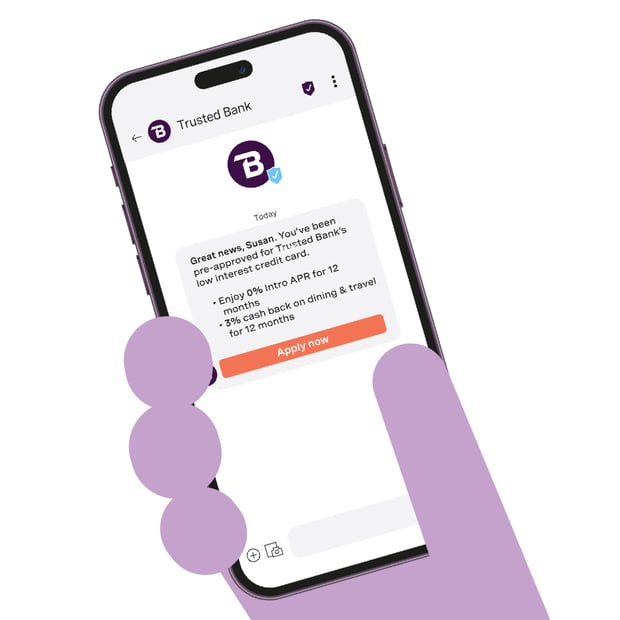
When done well, it leads to stronger customer loyalty, better user experiences, and more sales. For example, a clothing brand might send a reminder about a sale with images of items the customer browsed last week. A bank might send a secure message through WhatsApp to confirm a payment. These are messages that people actually want to receive.
Today, customers expect this kind of communication. They want fast answers, friendly support, and brands that respect their time. If your messages are helpful and easy to interact with, people will notice. And when customers feel like your business understands their needs, they’re more likely to stick around.
Customer engagement channels that matter in today’s world
There are more ways than ever to reach your customers, but not every channel works the same way. To keep people engaged, businesses need to focus on the channels their customers actually use and trust. That means going beyond email or old-school SMS. It means using rich, two-way tools like RCS, MMS, WhatsApp, Facebook Messenger, Viber Service Messages, and in-app chat that allow for better interaction and more useful conversations.
SMS and MMS
SMS is still one of the most reliable ways to reach people, especially when timing matters. It’s simple, fast, and has high open rates. But when you add images, videos, or links through MMS, the message becomes more interesting and easier to act on. For example, an MMS can include a product photo, a coupon code, or a map to a nearby store.
RCS (rich communication services)
RCS is the next generation of SMS, offering a richer, more interactive messaging experience — without requiring users to download an app. It works directly through the phone’s default messaging app and supports branded messages, verified senders, high-quality images, carousels, and clickable buttons. RCS also enables two-way conversations, allowing users to reply just like they would in a chat. With RCS, businesses can send messages that feel more like real-time conversations and less like static billboards.
WhatsApp is one of the most popular messaging apps in the world. Businesses can use it to send secure, real-time updates, confirmations, and customer support. It’s trusted, familiar, and already part of many people’s daily habits. With verified business accounts and interactive message types, WhatsApp is a strong option for both service and marketing.
Facebook Messenger
Facebook Messenger remains a key channel for reaching customers where they already spend their time. Businesses can use it for two-way conversations, customer care, and promotional updates, with the added benefit of easy integration into existing social strategies.
Viber Service Messages
Viber Service Messages offers branded, secure, and media-rich messages for businesses, with strong adoption in certain global regions. Viber messages give companies a trusted channel to send updates, reminders, and promotional content in a way that feels personal.
In-app messaging and web chat
When someone is already using your website or app, in-app messaging is a great way to guide them, answer questions, or suggest the next step. It helps move customers through the journey without asking them to switch platforms. And when combined with chatbots or live agents, it can support everything from onboarding to issue resolution.
Push notifications and email
Push notifications are helpful for quick alerts, reminders, or time-sensitive content. Email is still useful for detailed updates, newsletters, and transactional messages. But on their own, these channels don’t offer the same level of interaction or immediacy as messaging apps. That’s why many businesses use them alongside richer channels like RCS or WhatsApp.
Choosing the right mix of channels depends on your audience, your goals, and how you want people to interact with your brand. The most successful businesses meet customers where they are, using tools that support quick, personal, and valuable communication.
Use cases across key industries
Customer engagement messaging is not a one-size-fits-all strategy. Different industries use it in different ways based on what their customers need and how they interact with the brand. Whether you’re in retail, ecommerce, SaaS, or financial services, rich business messaging can help you connect more effectively, improve user experience, and drive better results.
Retail and ecommerce
Retailers and online stores often need to grab attention quickly. Messaging helps you reach customers in real time with promotions, product launches, or restock alerts. MMS and RCS are especially useful here because they let you include product images, coupon codes, and buttons that make it easy to take action.
For example, you might send a personalized message showing a product someone left in their cart, along with a photo and a limited-time discount. Or you could use WhatsApp to confirm an order and share delivery updates, keeping the customer informed and engaged from purchase to arrival.
SaaS and subscription businesses
Software companies use messaging to guide users through onboarding, share product updates, and reduce churn. In-app messages are perfect for helping new users learn how to use key features, while push notifications and SMS can remind customers about billing dates or subscription renewals.
When connected to your CRM or analytics, messaging can also support upsell opportunities. For instance, a message could be triggered when a user reaches a usage limit, offering an upgrade with a one-click response.
Financial services
Banks, insurance providers, and fintech companies rely on trust and security. That’s why messaging through verified channels like WhatsApp and RCS is so powerful. These platforms allow businesses to send secure alerts about transactions, appointments, or account activity.
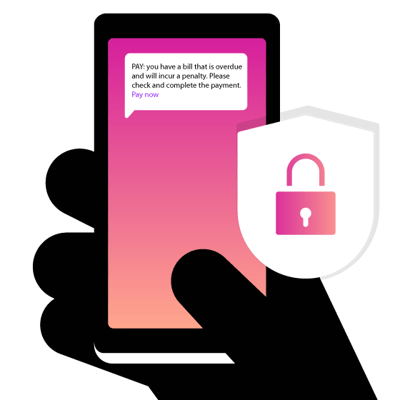
You can also use messaging for reminders about loan applications, balance updates, or fraud warnings. And since these messages are two-way, customers can respond quickly to confirm or ask for help, creating a better experience without needing to make a call.
 Fight messaging fraud with Vonage Fraud Defender
Challenges facing CRM and CX leaders — and how to solve them
Even with the right tools, delivering great customer engagement messaging isn't always easy. CRM managers, marketing directors, and customer experience teams often face real barriers when trying to connect with customers in more personal, timely ways. Here are three common challenges, and how the right platform can help solve them.
Managing too many channels at once
As customers use more apps and platforms, it becomes harder to keep messages consistent across SMS, RCS, WhatsApp, and in-app chat. Juggling multiple systems can lead to delays, missed messages, and confusion for both teams and customers.
The solution: Use a single API that connects all your messaging channels. With a platform like Vonage Messages API, you can manage conversations in one place while still delivering content across each customer's preferred channel.
Lack of resources for multimedia content
Creating rich messaging experiences with videos, images, and interactive buttons can take time and skill. Many teams struggle to keep up with creative demands, especially when trying to personalize content at scale.
The solution: Use templates, drag-and-drop tools, and AI-powered assistants to speed up content creation. Vonage AI Studio, for example, makes it easier to build and launch campaigns without needing a full development team.
Security, compliance, and customer trust
In industries like finance or healthcare, it's not enough for messages to look good—they also need to be secure and meet local regulations. And even outside of regulated industries, customers expect their information to be protected.
The solution: Choose a secure messaging platform that includes features like message encryption, JWT authentication, signed callbacks, and verified sender IDs. Pairing this with Vonage Verify API can add an extra layer of protection for sensitive transactions, account access, and identity verification.
How to measure and optimize messaging performance
To get the most out of your customer engagement messaging, you need to know what’s working and what’s not. That means tracking the right data and using it to improve your messages over time. When you can see how people interact with your content, it becomes easier to boost engagement, reduce drop-off, and increase return on investment.
Use engagement analytics to guide decisions
Every message you send creates a data point. Did the customer open it? Click a link? Respond? Take action? With the right customer messaging platform, you can collect this data in real time across every channel—whether it’s SMS, RCS, WhatsApp, or in-app chat. Tools like Vonage Reports API make it easy to access detailed engagement data and reporting, so you can analyze trends, track delivery, and tie results back to business outcomes.
By comparing performance across formats, teams can see which channels drive the most engagement and where customers tend to fall off. For example, you might find that MMS messages with product images get more clicks than plain SMS, or that RCS messages have higher reply rates during business hours.
These insights help marketers and CX teams adjust their strategy, fine-tune timing, and personalize messages based on real behavior — not guesswork.
Best practices for better customer engagement messaging
Here are a few simple ways to make your messaging more effective:
Personalize your messages: Use the customer’s name, interests, or behavior to send content that feels relevant.
Be conversational: Include clear calls to action and let customers reply when possible. People respond better when it feels like a real conversation.
Focus on value: Don’t just sell. Share updates, tips, reminders, or helpful links that make life easier for your audience.
Use a centralized platform: This helps keep your messaging consistent and ensures all teams are working with the same tools.
Avoid over-communicating: Sending too many messages can lead to frustration and opt-outs.
Test and learn: A/B test your content, subject lines, and timing to find what works best.
Good messaging isn’t just about reaching people — it’s about reaching them in the right way. When you measure what matters and keep improving, your messages will do more than inform. They’ll inspire action.
How to get started with more meaningful customer messaging
Not all messaging platforms are built the same. If you’re looking to create rich, reliable, and personalized conversations with your customers, Vonage offers the tools and support to make it happen — at scale.
Here’s what makes Vonage a strong choice for CRM, marketing, and customer experience teams:
A single API for messaging on all major channels
With Vonage, you don’t need to manage separate systems for SMS, MMS, RCS, WhatsApp, or in-app messaging. Vonage Messages API brings all of these into one platform, so your team can send consistent messages across every channel your customers use.
Rich business messaging features
Vonage supports multimedia content like videos, images, carousels, QR codes, and interactive buttons. This makes it easier to deliver messages that look good, perform well, and encourage two-way conversations.
AI-powered automation and templates
Vonage AI helps teams build smarter workflows without needing to code. You can create message flows, automate replies, and personalize content using customer data—all in one place.
Built-in security and compliance
For industries that require extra protection, Vonage includes advanced security features like JWT authentication, signed callbacks, encrypted messages, and verified sender IDs. These tools help you stay compliant with regulations and build customer trust.
Global reliability and enterprise support
With direct connections to a robust carrier network (carriers in over 190 countries), 99.99 percent uptime, and 24/7 support, Vonage is ready for businesses that need global reach and dependable performance.
Maximize engagement with rich business messaging
Whether you’re sending thousands of messages a day or just starting out, Vonage helps you deliver the right message, on the right channel, at the right time.
Deliver messages that matter with Vonage customer engagement solutions.
Sign up now
Was this helpful? Let's continue your API journey
Don't miss our quarterly newsletter to see how Vonage Communications APIs can help you deliver exceptional customer engagement and experiences on their favorite channels.

Thanks for signing up!
Be on the lookout for our next quarterly newsletter, chock full of information that can help you transform your business.
Still have questions about customer engagement messaging?
Customer engagement messaging is the strategic use of digital messaging channels — like SMS, MMS, RCS, WhatsApp, and in-app chat — to create two-way, multimedia conversations that build loyalty, enhance customer experience, and drive measurable engagement.
Rich messaging channels allow you to send multimedia content — images, videos, carousels, interactive buttons — that feels more personal, more engaging, and easier to act on. This creates a smoother customer journey and increases satisfaction.
Vonage supports messaging via MMS, RCS, WhatsApp, SMS, Facebook Messenger, Viber, in-app messaging, push notifications, and more. These are all manageable via a single, unified messaging API.
Vonage provides tools like AI Studio, templates, and automation features that simplify multimedia content creation — even for teams with limited resources or technical skill sets.
Yes. With engagement analytics and reporting tools like the Vonage Reports API, you can track opens, clicks, replies, conversions, and other data to continuously optimize your messaging performance.
Vonage includes features like JWT authentication, message encryption, signed callbacks, and verified sender IDs to help ensure compliance with industry standards and protect customer data.
Rich business messaging enables real-time, interactive communication across multiple industries and use cases. It enhances customer engagement, improves operational efficiency, and personalizes experiences across key channels like MMS, RCS, WhatsApp, in-app messaging, and SMS.
Retail and ecommerce
Abandoned cart recovery with product images and discount codes
Product launch announcements with media-rich carousels
Flash sale alerts with countdown timers and call-to-action buttons
Back-in-stock notifications personalized by user behavior
Order confirmations and delivery tracking via WhatsApp or SMS
In-store event invitations with location maps
Loyalty program updates and point balance reminders
Virtual try-on experiences or personalized style suggestions
SaaS and subscription services
Onboarding workflows using in-app chat or RCS sequences
Feature adoption prompts with short explainer videos
Billing reminders and subscription renewals
Usage milestone alerts, such as approaching limits or thresholds
Targeted upgrade offers based on user behavior or segmentation
Product update notifications with quick-access demo links
Re-engagement campaigns for inactive or churn-risk users
Financial services
Real-time transaction and balance alerts via secure messaging
Loan application status updates and reminders
Payment due date reminders through SMS or RCS
Fraud alerts with interactive options to confirm or report
Multi-factor authentication messages using secure APIs
Policy renewal notices for insurance customers
Interactive monthly statements with deep links to portals
New account onboarding support with guided steps
Healthcare
Appointment reminders, confirmations, and rescheduling links
Secure notifications of lab results or prescription updates
Refill alerts and medication adherence prompts
Campaigns for vaccinations or wellness programs
Two-way messaging for patient support or triage
Follow-up instructions after appointments or procedures
Health tracking messages for chronic condition management
Hospitality and travel
Booking confirmations and check-in instructions
Real-time flight or itinerary updates via SMS or WhatsApp
Digital concierge services through in-app or voice chat
Local recommendations or offers with multimedia content
Post-stay surveys and review requests
Upgrade offers with quick booking options
Reservation management and change notifications
Loyalty program status and reward communications
Logistics and delivery
Shipment tracking alerts with real-time location updates
Proof-of-delivery images and confirmation messages
Driver ETA notifications and live tracking
Address confirmation or drop-off instructions
Failed delivery resolution through two-way messaging
Post-delivery satisfaction surveys
You can start by exploring Vonage Messages API, or connect with a Vonage expert to design a solution around your customer engagement goals.