Rich Business Messaging Strategies for High-Converting Promotional Campaigns
Rich business messaging is transforming how promotional campaigns engage customers. Unlike traditional SMS, this next-gen communication supports interactive features like video demos, carousels, and one-tap calls to action, all delivered natively to a user’s mobile messaging app. For retail, ecommerce, and consumer brands competing for attention, this format makes it easier to stand out, drive engagement, and measure results in real time.
By using channels like RCS, MMS, or WhatsApp, marketers can launch visually compelling campaigns that include verified branding, personalized offers, and direct response options. Whether promoting a flash sale or releasing a new product, rich business messaging helps cut through inbox clutter and convert interest into action, all while tracking opens, taps, and clicks for smarter optimization.
-
1.
-
2.
-
3.
-
4.
-
5.
-
6.
-
7.
-
8.
-
9.
-
10.
-
11.
-
12.
What is rich business messaging?
Rich business messaging is a next-generation approach to mobile communication that expands beyond plain SMS. It uses high-quality visuals, interactive buttons, and branded components to create more engaging customer interactions. Delivered via protocols like RCS Business Messaging (RBM), Multimedia Messaging Service (MMS), or third-party messaging apps like WhatsApp, it helps businesses elevate both promotional and service conversations.
Whether it’s a video demo for a new product or a carousel of flash sale items with tappable “buy now” buttons, rich messaging creates a dynamic experience right inside a user’s native messaging app, without requiring a separate download or redirect.
Key features of rich business messaging
Rich business messaging delivers far more than upgraded visuals. Its capabilities support higher conversion, better engagement, and a more connected customer experience:
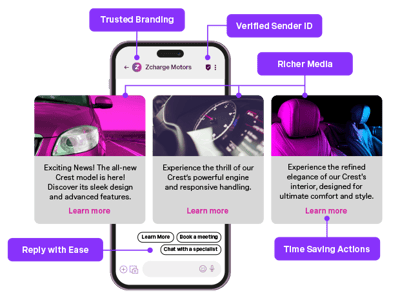
Rich media allows full-color images, GIFs, and video to be embedded within the message itself, offering more compelling content than standard SMS.
Interactive elements, like buttons, carousels, and suggested replies help guide the recipient toward the next step, whether that’s making a purchase or asking a question.
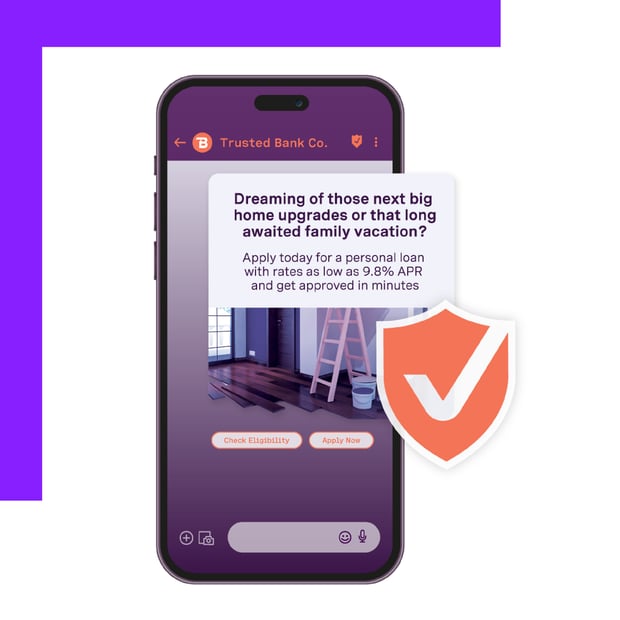
Verified business profiles with logos and color branding increase trust and reduce the risk of fraud or impersonation.
Real-time engagement tracking and analytics shows who opened, read, and clicked on each message, giving marketers the data they need to optimize.
Conversational features like typing indicators, read receipts, and reply capabilities make messages feel more human and responsive, closing the gap between brands and customers.
How rich business messaging works
Businesses trigger rich messages through an API (application programming interface) or automation platform. These messages can be scheduled as part of a campaign or triggered by external events like a purchase, appointment, or abandoned cart. From there, the messaging platform handles the formatting and delivery, automatically adjusting for device and channel compatibility.
Because users interact with these messages in their default messaging apps, the experience feels seamless; no downloads, redirects, or login steps required.
Platforms like Vonage Conversational Connect simplify this process by enabling rich, two-way conversations across messaging apps like WhatsApp, Messenger, Viber, and more. Marketers and support teams can launch context-rich campaigns with interactive content, while managing compliance, preferences, and personalization, all from one unified messaging orchestration layer.
For teams working inside Salesforce, Vonage Conversations for Salesforce allows you to launch and manage rich business messages directly from your CRM. It connects customer records to real-time messaging channels, so agents can personalize conversations and respond instantly, whether following up on a lead or sending a promotional update.
Examples in action
A retailer enhances customer service by sending a support message with three tappable buttons: “Track my order,” “Change address,” and “Request return.”
A rideshare app delivers transactional updates through a rich card that confirms a booking, shows the car and driver info, and includes a live map with a “Contact driver” option.
An ecommerce brand runs promotional campaigns by pushing a holiday sale with a carousel of featured products, each offering “View deal” and “Add to cart” actions.
Insight: Rich business messaging isn’t just about how messages look, it’s about what they let your audience do. The interactive layer is what drives conversions, retention, and long-term value.
Why promotional campaigns benefit from rich business messaging
Promotional messaging thrives on timing, clarity, and impact. Rich business messaging gives you all three, while solving a major problem faced by marketers: standing out in a saturated inbox.
Unlike plain text SMS or generic emails, RCS, MMS or WhatsApp promotional messages can include vivid imagery, interactive elements, and direct calls to action. This creates a tactile experience that drives customer engagement and encourages immediate response, especially during time-sensitive campaigns like flash sales, product drops, or seasonal promotions.
What makes rich messaging ideal for promotional campaigns
More visual real estate allows you to showcase new products using high-resolution images or looped video instead of relying on plain-text descriptions.
Stronger calls to action improve conversion rates by placing buttons like “Shop now,” “Save offer,” or “Claim discount” directly within the message.
Frictionless journeys create a seamless user experience without requiring app switching or extra clicks, which is especially valuable on mobile where every tap matters.
More-targeted engagement is achieved by displaying carousels tailored to each user’s behavior, such as showing different products or offers based on location or purchase history.
Campaign visibility and insight are enhanced with real-time read receipts, click-through tracking, and conversion data that reveal what’s working and where to optimize.
Key campaign features supported by rich business messaging
Rich business messaging platforms go beyond simple alerts or reminders. They enable fully interactive, trackable promotional campaigns designed to drive conversions in real time. Below are the core features marketers can use to build high-impact campaigns using RCS or MMS.
RCS or MMS Rich media elements
Campaigns can include:
High-resolution product images that showcase details
Promotional videos or GIFs that demo new releases
Brand-approved templates that maintain visual consistency
These assets load natively in a user’s messaging app, eliminating the need for mobile site redirects that often disrupt the purchase flow.
Interactive calls to action
Interactive elements like tappable buttons, suggested replies, or smart links make it easy for recipients to:
Claim a coupon
Visit a landing page
Add a product to their cart
Start a support chat
RSVP to an event
These CTAs reduce friction and let the customer act while interest is highest.
Carousels and product swipes
With RCS, campaigns can include swipeable carousels that display multiple offers or product categories within a single message. Each card can feature:
Product image or video
Short description
Discount tag
Direct “Buy now” or “View more” buttons
This format is especially effective for flash sales, seasonal bundles, or collection launches.
Verified branding
RCS supports verified business profiles, which include your company’s name, logo, and brand color, all embedded within the message thread. This builds trust, increases open rates, and ensures customers recognize your brand instantly, even before they read the message.
Engagement analytics
Unlike SMS, which offers minimal data, rich business messaging provides:
Delivery and read receipts
Click tracking by button or link
Engagement heatmaps
Conversion event logging
You can monitor which formats or content types perform best, adjust timing, and optimize creative in real time.
Insight: Verified branding combined with analytics doesn’t just improve engagement, it provides legal defensibility and attribution for promotional opt-ins, a growing requirement under data privacy regulations.
 Customer Engagement
Expanding rich messaging with WhatsApp for business
In addition to RCS and MMS, WhatsApp Business is a powerful channel for delivering rich, interactive promotional campaigns, especially in regions where RCS support is limited or fragmented. As one of the most widely used messaging platforms worldwide, WhatsApp offers verified business profiles, template messaging, and conversation-based commerce tools that align closely with rich messaging objectives.
Key WhatsApp promotional features include:
Interactive templates
Use pre-approved message templates with embedded buttons like “Shop now” or “View product.”
Product carousels
Showcase multiple products in one message using Meta’s catalog integration, ideal for flash sales or new collections.
Branded profiles
WhatsApp Business accounts include logos, business info, and verification badges for added trust.
Media support
Send high-quality images, videos, and PDFs natively in the chat.
Two-way engagement
Easily transition from promotional messages to customer service or order support within the same thread.
Pro Tip: For regulated campaigns, WhatsApp provides opt-in workflows and conversation time windows that support compliance while still enabling meaningful promotional reach.
Hypothetical examples of rich messaging in promotional campaigns
When implemented strategically, rich business messaging transforms how brands engage customers, driving urgency, simplifying interactions, and boosting ROI. Here are three examples showing how companies might put rich messaging to work.
Flash sale activation for a fashion retailer
A fashion brand could use RCS to launch a 48-hour flash sale with messaging such as:
A carousel of best-selling items
Tappable buttons for “Shop now” and “Apply X% off”
A countdown timer GIF to add urgency
The entire campaign would unfold inside the messaging app — no app download or landing page required. Customers could browse, tap, and convert in seconds. Possible results: a dramatic lift in click-through and cart completion.
Pro Tip: Including a visual countdown or limited-time badge in your RCS card design increases urgency without needing additional copy.
Product launch demo from a consumer electronics brand
To debut a new smart speaker, a consumer electronics company could push a promotional MMS featuring:
A 30-second demo video of the product in use
An embedded coupon code for early buyers
A button to pre-order or schedule a live virtual demo
This would give customers both education and incentive in one seamless message, which should lead to strong pre-order volume and reduced support inquiries.
Loyalty re-engagement for a quick-service restaurant
A QSR chain could re-engage dormant app users with a rich messaging campaign that includes:
A personalized digital coupon with dynamic QR code
Suggested reply options like “Order pickup” or “Show locations”
A verified brand sender label with a branded color theme
The campaign could reach customers via RCS first, with fallback to MMS where needed. Those who are engaged should be more likely to return within a few days.
Common mistake: Relying solely on SMS fallback weakens the experience. Always test your RCS/MMS creative on all target devices to ensure visual integrity and CTA placement.
Comparing SMS, MMS, and RCS for campaign impact
Choosing the right messaging format is critical to campaign performance. While SMS remains widely used, richer formats like MMS and RCS offer advanced capabilities that unlock deeper engagement. Understanding the differences helps marketers match the right channel to the right use case, and ultimately boost conversion outcomes.
How SMS works in campaigns
SMS is a universal, text-only format with high deliverability. It’s ideal for short, time-sensitive alerts but lacks the features needed for brand storytelling or visual impact. Messages are limited to 160 characters, with no native support for media, buttons, or interaction tracking.
Despite its reach, SMS campaigns can struggle to stand out in crowded inboxes, especially during high-volume promotion periods like holidays or flash sales.
Common use cases:
Delivery updates
Short coupon codes
Account or appointment reminders
What MMS adds to the experience
MMS expands on SMS by enabling images, videos, and longer message content. This makes it better suited for product spotlights, event invites, or visual announcements. MMS retains wide carrier support and doesn’t require app downloads, but message formatting can vary by device or network.
With an MMS campaign, marketers can include product shots, scannable coupons, and even audio messages, all from the native messaging app.
Common use cases:
Product previews or event flyers
Sales promotions with branded visuals
Limited-time offers with media attachments
Why RCS outperforms for engagement
RCS (Rich Communication Services) brings the most advanced messaging features to the default messaging app. Unlike SMS or MMS, RCS supports verified branding, interactive buttons, carousels, read receipts, and rich media, all within a single interface.
This makes RCS ideal for promotional campaigns that require high interactivity, trust signals, and measurable results. Customers can browse, tap to buy, or engage in two-way chats, without being redirected to external websites or apps.
Common use cases:
Product launches with video and CTA buttons
Swipeable carousels for flash sales
Loyalty campaigns with interactive reminders and timers
Where WhatsApp fits into the mix
WhatsApp Business offers a rich, branded messaging experience in a globally trusted app. It supports multimedia content, quick replies, carousels (via product catalogs), and interactive buttons, all within end-to-end encrypted conversations. WhatsApp also offers verified business profiles, making it a strong fit for relationship-building, transactional updates, and customer engagement in regions where WhatsApp is dominant.
Unlike RCS, WhatsApp doesn’t rely on carrier compatibility and is app-based, making it widely available across devices and markets.
Common use cases:
Conversational promotions with follow-up reminders
Secure order confirmations or shipping updates
Product discovery through interactive catalogs
Personalized campaigns with opt-in engagement
Format comparison table
Feature
SMS
MMS
RCS
Text support
Image/video support
Character limit
160
~1,600
Flexible
Flexible
Branded sender ID
(verified profile)
Interactive buttons
Read receipts
Carousel support
(via catalog)
Analytics tracking
Basic
Limited
Advanced
Moderate (with API)
App required
No
No
No (native)
Yes
Security
Basic
Basic
Verified and encrypted
End-to-end encrypted
Cost per message
Low
Medium
Competitive
Varies by region & use
Insight: If you’re running a promotion that depends on visuals, urgency, or interactivity, RCS offers the most complete feature set. For basic alerts or transactional reminders, SMS remains a cost-effective fallback. MMS sits in the middle, offering visual flair without full interactivity or analytics.
How to track rich messaging engagement and optimize performance
Rich business messaging doesn’t just improve how messages look, it dramatically improves how campaigns are measured. With built-in analytics features, marketers can go beyond delivery metrics and gain real insight into engagement, behavior, and outcomes.
Key metrics to track
Campaign success depends on understanding how recipients interact with each message. Rich messaging platforms make it easier to track more than just opens or clicks.
Important metrics include:
Delivery status confirms that the message successfully reached the recipient’s device.
Read receipts indicate whether the recipient viewed the message, which is supported in RCS messaging.
Button click-throughs track which call-to-action or quick reply option the user selected.
Carousel engagement measures swipes, taps, and overall product interest within interactive message elements.
Link conversions connect specific parts of the message to resulting web traffic or completed purchases.
Opt-outs identify unsubscribes or signs of message fatigue, helping teams adjust frequency or targeting early.
Real-time analytics make a difference
One of the most powerful features of RCS is real-time feedback. Marketers can see engagement happening live and adjust campaigns mid-stream. For example, if a carousel image is underperforming, it can be swapped out without restarting the campaign.
Rich messaging campaigns also support engagement tracking, but often rely on redirects or third-party analytics platforms. RCS builds this intelligence directly into the native experience.
Pro Tip: Use A/B testing within your rich messaging platform to compare CTAs, visual formats, or copy tone. Even subtle changes can result in measurable differences in engagement.
Segment and refine based on performance
Modern platforms let you segment your audience dynamically based on message behavior. For example:
Follow up with customers who tapped a coupon but didn’t redeem it.
Re-engage users who swiped through a product carousel but didn’t purchase.
Send different messaging to highly engaged users vs. low responders.
Segmentation leads to smarter retargeting and higher return on campaign investment.
Engagement insights by messaging type
Metric
SMS
MMS
RCS
Delivery confirmation
Read receipts
Link tracking
Limited
(via API)
Button or CTA interaction
Carousel tracking
(via product catalog)
Real-time analytics
Limited
Moderate (via Business API)
Segmentation support
Manual
Partial
Dynamic
Dynamic (via API or CRM integration)
Common mistake: Some teams only track click-throughs and miss deeper behavioral signals like swipe activity or button selection. Rich business messaging allows for a more nuanced understanding of what your audience cares about, if you know where to look.
Best practices for campaign success
Launching a rich business messaging campaign isn’t just about flashy visuals, it’s about thoughtful execution that drives results. Whether you're using RCS, MMS, or both, applying the right strategy ensures your campaign stands out without overwhelming your audience.
Match the message to the channel
Each messaging format has strengths. Use them intentionally:
RCS supports interactive carousels, buttons, and read receipts. It’s best for engaging, guided experiences like product discovery or checkout.
WhatsApp allows branded, encrypted two-way messaging, including buttons, quick replies, carousels (via product catalogs), and file attachments. It’s best for global audiences, transactional updates, and conversational campaigns where trust and security matter.
MMS allows for rich media like images and videos but lacks interactivity. It’s ideal for single-shot promos with strong visual impact.
SMS can serve as a fallback channel, especially for users without RCS-enabled devices.
The best campaigns adapt creative and CTA structure to the capabilities of each channel.
Insight: Let your campaign’s intent guide the format. Use RCS or WhatsApp when interaction and branding matter most, MMS when visual flair is enough, and SMS when reach and simplicity are key.
Focus on a single, strong CTA
Rich messaging gives you space for more content, but that doesn’t mean you should overload it. Each campaign should highlight one primary call to action, whether it’s:
Claiming a digital coupon
Tapping to buy a new product
Booking a service
Sharing feedback
Secondary CTAs can exist, but the user’s attention should clearly be guided to the next best step.
Use clear and compelling visuals
Strong imagery isn’t just decoration. It drives decision-making. Make sure all media:
Loads quickly and looks crisp across devices
Reflects brand quality and tone
Aligns directly with the CTA (e.g., show the actual product being promoted)
For video, keep it short and immediately impactful, especially for time-sensitive promos like flash sales or product drops.
Personalize whenever possible
Rich business messaging can pull in customer data to personalize the experience. This can be as simple as using a first name, or as advanced as showcasing previously viewed products.
Personalization boosts relevance, increases interaction, and strengthens the brand relationship. Just be mindful of privacy regulations and ensure opt-in consent is always respected.
Optimize for timing and frequency
Promotional fatigue is real, especially on mobile devices. Rich messages should feel timely and valuable, not like spam.
Avoid sending more than one rich promo per day unless part of a larger campaign sequence.
Time messages based on engagement patterns (e.g., evening shopping habits).
Use campaign analytics to refine your send windows.
The next generation of customer engagement
Rich business messaging is no longer a future-facing innovation, it’s a current necessity for brands that want to be seen, heard, and remembered in a saturated digital landscape. As customer expectations evolve, static, text-only promotions struggle to cut through the noise. Campaigns powered by rich media, interactivity, and intelligent delivery win attention by delivering relevance at the right time, on the right channel.
Whether it’s a carousel highlighting flash sale items, a tap-to-redeem coupon, or a short video showcasing a new launch, rich messaging lets your team connect with customers in a more human, branded, and results-driven way. It turns traditional outreach into ongoing conversations, fostering loyalty while driving measurable action.
With solutions like Vonage Messages API, businesses can scale these experiences across RCS, MMS, WhatsApp and more, all while gaining real-time insights into what’s working and where to improve. From campaign strategy to channel orchestration, programmable messaging platforms make it easier to deliver engagement that converts.
Sign up now
Was this helpful? Let's continue your API journey
Don't miss our quarterly newsletter to see how Vonage Communications APIs can help you deliver exceptional customer engagement and experiences on their favorite channels.

Thanks for signing up!
Be on the lookout for our next quarterly newsletter, chock full of information that can help you transform your business.
Frequently asked questions about rich business messaging
SMS supports plain text and limited links. MMS adds support for media like images or audio. RCS enables branded, interactive messages with rich media, buttons, read receipts, and real-time feedback, ideal for driving higher engagement in campaigns.
Yes. The WhatsApp Business Platform supports interactive message templates, branded profiles, and product carousels, making it a strong alternative or complement to MMS and RCS in rich messaging campaigns, especially for mobile-first or international audiences.
RCS is not yet supported on every device or carrier. However, fallback options like MMS or SMS ensure message delivery. MMS is more universally available but offers fewer interactive features than RCS.
Rich messaging platforms offer detailed analytics, including open rates, click-throughs, button interactions, and read receipts. These insights help optimize future campaigns and justify investment in rich formats.
No. RCS and MMS messages are delivered through native messaging apps on supported devices, meaning customers don’t need to download or log into separate platforms.
Yes. You must obtain explicit opt-in from recipients, adhere to local data privacy laws, and ensure you include clear calls to action and unsubscribe options where applicable.
Short video demos, limited-time coupons, interactive carousels, and product images with “Buy now” buttons typically drive strong performance, especially when paired with audience targeting and personalized content.
Yes. Many messaging APIs and platforms support A/B testing, allowing you to test variations of your message content, media type, or call-to-action across segments to determine which version drives better results.
Yes. Reputable messaging APIs use encrypted channels and authentication protocols to protect message integrity and customer data. RCS also includes sender verification to reduce fraud risk.
With the right platform, set-up can take just a few days. APIs like the ones from Vonage support rapid integration and offer templates, automation tools, and analytics out of the box for faster go-to-market timelines.