Is Your UCaaS Integration With CRM Driving Results? Here’s How To Maximize It
UCaaS integration with CRM helps teams deliver faster, more personalized customer experiences by bringing conversations and customer data into one platform. Features like click-to-dial, screen pops, and automated call logging reduce friction and improve performance across every interaction.

Why CRM + UCaaS integration matters
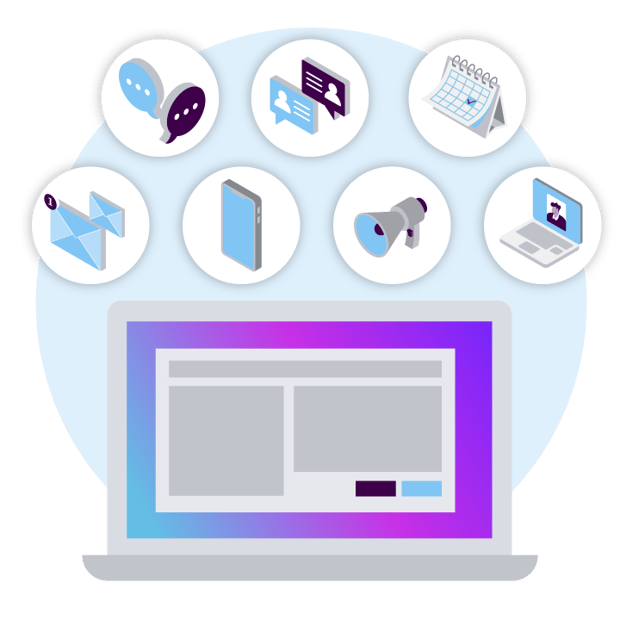
Customer conversations are happening across calls, video meetings, and messages — but the context for those conversations often lives in your CRM. When those tools aren’t connected, important details get lost, follow-ups slip through the cracks, and service slows down.
That disconnect can cost you more than just efficiency. It can cost you trust, loyalty, and revenue.
Teams that integrate Customer Relationship Management (CRM) platforms like Salesforce, HubSpot, or Zoho with Unified Communications as a Service (UCaaS) systems work smarter. They gain instant access to customer insights during conversations, automate repetitive tasks, and deliver more personalized service at every step.
This article explores what UCaaS + CRM integration looks like, the features that make it powerful, and how your team can get more value from every interaction.
What is UCaaS integration with CRM?
Unified Communications as a Service (UCaaS) brings together calling, video, messaging, and team collaboration into a single cloud-based platform. When you connect that platform with your CRM, every interaction becomes more informed and more efficient.
Here’s how it works. The integration allows your CRM and UCaaS tools to share data automatically. Features like click-to-dial, screen pops, and automated call logging make it easier for agents to manage conversations without toggling between systems. Tasks like note-taking, activity tracking, and customer updates can happen in real time, within a single interface.
For example, if a sales rep receives a call, the integration can instantly display the caller’s name, issue stage, and last conversation — so they can jump into the discussion with full context. After the call, everything is recorded in the CRM, without the rep needing to lift a finger.
Integrations can range from basic functionality like call controls to advanced features like sentiment analysis, transcription, and AI-powered insights. Some UCaaS providers offer out-of-the-box integrations with major CRMs and productivity tools — reducing setup time and simplifying workflows.
Benefits of integrating UCaaS with CRM
Bringing together your CRM and communications platform doesn’t just streamline tasks. It changes the way your teams connect with customers, solve problems, and drive growth.
Here are some of the core benefits businesses see when they integrate Unified Communications as a Service (UCaaS) with their CRM system:
Stronger customer experiences
Agents don’t have to start from scratch on every call. With access to contact history, open tickets, and past conversations, they can jump right into the issue with full context. That means faster answers and more personal service.
Increased productivity across teams
Click-to-dial, screen pops, and automated logging shave seconds off every interaction — and hours off the workweek. Teams can focus on conversations, not data entry or switching tabs.
In fact, companies that integrate UCaaS with CRM have seen call handling times drop by as much as 45%, thanks to better access to customer data at the moment it’s needed
More accurate customer data
When call details, notes, and recordings are logged automatically, there’s less risk of missed or incomplete records. Managers get better visibility into pipelines, service trends, and performance.
Improved internal collaboration
Everyone on the team — from sales to service — can see the same interaction history. No one has to ask, “Did someone already call this customer?” or dig through emails to get the full story.
Shorter sales cycles
Reps can follow up faster, prep for calls with better insight, and avoid duplicating outreach. Customers feel known, not chased. And deals move forward with less friction.
Integrating UCaaS with CRM helps businesses scale their service without losing the human touch — and that’s what keeps customers coming back.
Problems solved by integration
Disconnected systems create real challenges for teams that rely on speed, accuracy, and context. When your CRM and communications tools don’t talk to each other, the gaps show up in your customer experience — and in your bottom line. With UCaaS + CRM integration, you avoid:
Manual call logging and errors that waste time
Missed follow-ups when customer history is scattered
Toggling between multiple systems to manage one call
Inconsistent data that makes reporting less reliable
Onboarding delays when new agents must learn disconnected tools
With the right UCaaS and CRM integration in place, teams work from one system of truth and spend less time on workarounds.
Features that make UCaaS integration with CRM work better
The real value of UCaaS and CRM integration comes from the features it unlocks. These tools remove friction from daily workflows, giving your teams more time to focus on customers — not on managing software.
Here are some of the most impactful capabilities:
Click-to-dial from the CRM
Agents can make calls directly from a contact or lead record with just one click. There’s no need to copy and paste phone numbers or switch apps. It’s faster, easier, and less error-prone — especially when making dozens of calls a day.
Screen pops with customer context
When a call comes in, a pop-up shows who’s calling and pulls up their CRM profile automatically. The agent sees past conversations, current cases, and open opportunities — before saying hello.
Automated call logging and notes
Every call is automatically logged in the CRM, along with the date, time, and duration. Agents can also add notes without needing to open a second app or rely on memory after the conversation.
Centralized call recordings
Some integrations allow you to record calls and link them directly to a contact or case record. That makes it easier for teams to review conversations, resolve issues, and meet compliance needs.
Real-time data sync between systems
Information entered in one system is reflected in the other — instantly. That keeps your CRM data accurate and your communication tools up to date, without extra manual steps.
These features may seem simple on the surface, but together they make a big difference in how teams work and how customers experience your brand.
 Read the article
What CRMs can you integrate with?
UCaaS and CRM integration only delivers value if it works with the systems your teams already use. Fortunately, many cloud communications platforms are designed to connect with today’s most popular CRMs — no custom code required.
Here are a few of the most commonly supported platforms:
Salesforce
As one of the most widely used CRMs, Salesforce supports advanced integration features like click-to-dial, screen pops, automated activity logging, and analytics dashboards. Some UCaaS platforms also integrate directly with Salesforce through purpose-built solutions.
HubSpot
HubSpot’s all-in-one platform for marketing, sales, and service makes it a strong match for UCaaS integration. Teams can manage calls from inside HubSpot, auto-log conversations, and sync contact data across channels.
Zoho CRM
Zoho users can benefit from voice call integrations, screen pops, and workflow triggers. When paired with UCaaS, Zoho CRM becomes a more powerful tool for managing outreach and ongoing engagement.
Microsoft Dynamics 365
Integrating UCaaS with Dynamics lets agents take and track calls from within the CRM. Auto-created records, synced notes, and in-platform updates help preserve customer data and improve collaboration between teams.
Other tools and custom systems
The best-in-class UCaaS solutions support hundreds of business applications — ranging from Freshdesk and Zendesk to custom-built CRMs. Solutions like the Vonage Integration Suite are designed to work across multiple environments, using APIs and pre-built connectors to speed up deployment.
Whether your teams rely on an off-the-shelf CRM or something tailored to your business, UCaaS integration helps you unify your communication and customer data in one place.
How to maximize your UCaaS + CRM integration
Getting your CRM and UCaaS platform connected is a great first step — but there’s more you can do to unlock the full value of your integration. Small improvements in setup, training, and process design can lead to big gains in productivity and customer experience.
Here are some proven ways to make the most of your UCaaS and CRM setup:
Standardize workflows across teams
Map out how your sales, service, and support teams use the integration day to day. Set consistent expectations for call logging, note-taking, and task management. When everyone follows the same process, it’s easier to track performance and spot opportunities.
Train teams on the full feature set
Click-to-dial and screen pops are just the start. Make sure your agents know how to use other features like call tagging, calendar syncing, and custom field updates. The more they use, the more efficient they become.
Use data to drive smarter decisions
When calls, meetings, and messages are tracked in the CRM, you get a clearer picture of customer activity. Use those insights to adjust staffing, refine scripts, or improve customer handoffs across departments.
Look for flexible and scalable integrations
Your business isn’t standing still — your tools shouldn’t either. Choose integration solutions that work with multiple CRMs, offer API access, and support future upgrades without major disruption. Platforms like the Vonage Integration Suite are designed with flexibility in mind.
Close the loop with automation
Set up automated workflows that trigger based on communication events. For example, create follow-up tasks after missed calls, or send summaries to managers after high-value interactions. These automations reduce manual work and help teams stay on top of what matters.
The more you align your systems, people, and processes, the more you’ll get out of your UCaaS and CRM investment.
How different teams benefit from UCaaS + CRM integration
The benefits of UCaaS and CRM integration don’t just apply to one team — they show up across your organization. Whether you're managing pipelines, resolving support tickets, or maintaining tech infrastructure, connected tools create smoother workflows and stronger outcomes.
Here’s how different roles can put the integration to work:
For sales operations leaders
Sales Ops teams can use CRM-integrated UCaaS tools to streamline outreach, reduce admin work, and increase visibility into pipeline activity. Click-to-dial and call logging features save time, while reporting dashboards give leadership a clearer view of call volumes, outcomes, and trends.
Top benefit: Faster sales cycles with better data and fewer missed steps.
For customer experience managers
When service agents have access to real-time customer data during calls or chats, they resolve issues faster and build trust with every interaction. Features like screen pops, contact history, and shared notes reduce friction and allow for more personalized support.
Top benefit: Improved first-contact resolution and more consistent customer experiences.
For IT administrators
From a systems standpoint, CRM and UCaaS integration simplifies workflows and reduces the number of platforms agents need to manage. It also improves oversight, enhances data security, and makes user provisioning and training more efficient.
Top benefit: Centralized control and better tool adoption — without adding complexity.
When your tools support each team’s goals, your entire business moves faster.
Better Business outcomes of UCaaS integration with CRM
When communication tools and customer data live in the same place, teams work more efficiently — and customers notice the difference.
Sales teams move faster because they don’t have to search for call notes or log activities by hand. Support agents offer better experiences because they can see a customer’s history the moment a call comes in. IT admins spend less time managing disconnected tools, and more time enabling performance across the business.
In short, UCaaS and CRM integration isn’t just about better workflows — it’s about building a business that’s more connected, more responsive, and more customer-focused.
Ready to connect your communications with your CRM?
If your teams are switching between tools or struggling to keep customer data up to date, there’s a better way to work.
The Vonage Integration Suite brings together your cloud-based phone system and the CRM platforms you use every day — Salesforce, HubSpot, Microsoft Dynamics 365, and more. With features like click-to-dial, automatic call logging, and real-time syncing, your teams can focus on conversations — not admin tasks.
Explore what’s possible when your CRM and communications work together.
Sign up now
Want to know more about this (and other) topics?
Don't miss our quarterly newsletter for the latest insights into how our Unified Communications and Contact Center solutions can enhance your business and even work together to take communication to new levels.

Thanks for signing up!
Be on the lookout for our next quarterly newsletter, chock full of information that can help you transform your business.
Still have questions about UCaaS integration with CRM?
UCaaS integration with CRM connects cloud-based communication tools — like calling, video, and messaging — with customer relationship management platforms. This setup allows teams to manage conversations and customer data in one place, improving productivity and service quality.
Most UCaaS platforms integrate with leading CRMs like Salesforce, HubSpot, Zoho, and Microsoft Dynamics 365. Some also support additional systems, including Zendesk and Freshdesk.
Typical features include click-to-dial, screen pops with customer info, automated call logging, and synced data — tools designed to save time and improve customer conversations.
Agents can see the full customer history before answering a call, which leads to faster resolutions and more personalized service. Customers don’t have to repeat themselves or wait while reps search for information.
It depends on the platform, but many UCaaS providers offer out-of-the-box integrations or guided setup through apps and APIs. Solutions like the Vonage Integration Suite are designed to simplify this process for both IT teams and end users.