Customer Engagement Messaging for Unified Loyalty Program Updates
Customer engagement messaging has evolved into one of the most effective tools for building long-term loyalty, especially when it comes to rewards programs. Brands today aren’t just broadcasting points balances or limited-time offers, they’re delivering real-time, two-way updates that keep customers connected and coming back.
From automated bonus alerts and redemption reminders to personalized status updates across channels, unified loyalty messaging helps brands reduce churn, increase program participation, and deliver a seamless, elevated experience. Whether you use RCS, WhatsApp, SMS, or in-app chat, the key is timely, relevant, and secure messaging, powered by rich communications APIs and smart workflows.
Why It Works
Customers stay loyal when communication is simple, personal, and timely. Unified engagement messaging connects loyalty platforms with the channels people actually use, so updates arrive when and where they matter.
Keeps members active by reminding them of points, rewards, and bonuses before they expire.
Drives higher redemption through quick-reply links and personalized offers.
Builds trust with consistent, secure messages across SMS, WhatsApp, and RCS.
Reduces churn by turning one-way notifications into two-way conversations that feel human.
This approach turns loyalty messaging from routine reminders into real-time engagement that grows satisfaction and long-term brand value.
-
1.
-
2.
-
3.
-
4.
-
5.
-
6.
-
7.
-
8.
-
9.
What is customer engagement messaging?
Core principles of customer engagement messaging
Customer engagement messaging refers to the strategic use of communication channels to foster loyalty, build relationships, and drive value throughout the customer journey. It’s not just about sending promotions, it’s about creating meaningful, two-way conversations that deliver utility, recognition, or delight.
Engagement messages support lifecycle stages like onboarding, retention, re-engagement, and reward redemption. At the heart of effective messaging are these principles:
Personalization based on behavior, preferences, and past interactions
Timeliness tied to real events like purchases, inactivity, or milestones
Value-first messaging that delivers relevance before asking for action
Channel consistency across SMS, email, push, in-app chat, WhatsApp, and RCS
Measurement for performance tracking and ongoing optimization
Whether triggered by loyalty actions (like earning points), behavioral signals (like app abandonment), or business rules (like point expiry), these messages keep customers engaged by being helpful, not interruptive.
How customer engagement messaging is used today
Today’s leading loyalty programs use customer engagement messaging to send:
Welcome and onboarding flows via SMS and in-app notifications
Bonus point or tier change alerts via WhatsApp, push, or RCS
Redemption reminders before points expire
Post-purchase follow-ups for reviews or feedback
Personalized offers based on preferences or location
Anniversary or birthday perks to build emotional loyalty
Retailers, airlines, restaurants, and subscription brands all use messaging to keep loyalty top-of-mind, using automation and APIs to scale this across channels without sacrificing personalization.
The impact of customer engagement messaging on loyalty success in 2026
Customer engagement messaging has evolved from a basic promotional tool into a strategic cornerstone of brand loyalty, retention, and revenue growth. In 2026, it's no longer just about sending timely alerts or reminders. It's about delivering meaningful, context-aware communication across every stage of the customer lifecycle, in real time, across multiple channels, and with full personalization.
Whether you're notifying members about expiring points, nudging them to redeem bonuses, or automating post-purchase check-ins, engagement messaging now plays a direct role in how customers perceive and interact with your brand. The right message, delivered through the right channel, can turn a dormant account into an active advocate.
Emerging trends in customer engagement messaging
Trend
Why It Matters
Omnichannel loyalty updates
Customers expect reward and redemption info to arrive through their preferred apps — SMS, RCS, WhatsApp, or in-app chat.
Real-time personalization
Loyalty members respond more to messages triggered by their behavior (e.g. near-tier upgrades or abandoned redemptions).
2-way interaction is the norm
Static alerts are being replaced by quick reply buttons, AI chatbots, and feedback prompts for more dynamic experiences.
Privacy-first design
With growing privacy regulations, brands must balance personalization with transparent consent management.
API-led integration
Loyalty platforms are increasingly plugged into messaging APIs, syncing real-time status changes with outbound communications.
Pro Tip — To increase redemption rates, send bonus point reminders with a quick reply button that allows instant access to eligible rewards, no app login required.
Step-by-step: Setting up your loyalty engagement messaging
Delivering effective loyalty communications through messaging requires more than just sending updates. It demands thoughtful coordination across data, platforms, and channels. Below is a streamlined step-by-step process used by leading retail and service brands.
Step 1: Capture consent and preferences
Before sending any loyalty updates, businesses must gather explicit opt-ins for messaging. This is essential for both compliance (e.g., GDPR, TCPA) and customer trust. Consent can be collected through:
Sign-up forms
In-store checkouts
Loyalty program portals
SMS or email double opt-ins
Step 2: Centralize loyalty data
Next, customer profiles, point balances, tiers, and engagement history need to be pulled into a centralized platform, such as a CRM or CDP. This enables real-time messaging based on live data, not outdated snapshots.
Integrate loyalty systems with customer data hubs
Sync behavior triggers like purchases, app logins, or inactivity
Maintain a single source of truth for each customer
Step 3: Define key messaging touchpoints
Outline the core loyalty updates and communications you’ll automate. These should align with the member lifecycle, including:
Welcome messages after enrollment
Bonus point promotions or limited-time offers
Tier upgrade or renewal alerts
Point expiry reminders
Redemption confirmations
Anniversary or birthday recognition
Step 4: Design automated message flows
Using messaging APIs or CPaaS platforms, create rule-based journeys that trigger messages based on specific conditions. Each touchpoint can include personalization tokens (e.g., first name, tier), timing logic, and fallback channels.
Example:
If user reaches 90% of points needed for next tier
Then send an RCS alert with an “Unlock Silver Tier” CTA
If RCS fails, fallback to SMS with shortened offer link
Step 5: Launch on preferred channels
Once workflows are designed, activate them across your customers’ chosen channels, such as:
SMS for urgency and reach
RCS for rich media and interactive buttons
WhatsApp for two-way service
In-app or email for supplementary content
Step 6: Monitor performance and optimize
Real-time analytics give insight into what’s working, and what’s not. Track key metrics across each touchpoint:
Open/read rates
Clicks and redemptions
Tier upgrades or drop-offs
Point expiration rates
Unsubscribes or opt-outs
Use A/B testing, message timing refinements, and segmentation to improve each campaign iteration.
Understanding customer engagement messaging in practice
Customer engagement messaging is how brands communicate across digital channels to build loyalty and deliver value throughout the customer journey. It is more than sending promotions. It is about creating timely, relevant, two-way conversations that make customers feel recognized and supported.
Common goals of engagement messaging
– Welcome new customers and guide them through onboarding
– Teach users about helpful features or benefits
– Keep loyal customers engaged with personalized outreach
– Reconnect with people who have gone quiet
– Recommend products or services based on what they already like
– Celebrate milestones with thank you messages or special rewards
Popular messaging channels
– Email works well for detailed updates and newsletters
– SMS is great for quick alerts and reminders
– Push notifications reach users inside apps or browsers
– In-app messages provide helpful tips during key moments
– Social direct messages allow quick support and updates
– Chatbots and live chat make it easy to answer questions right away
Core principles of effective engagement
– Personalize every message based on user behavior and preferences
– Time messages around customer actions instead of random schedules
– Focus on giving value before asking for action
– Keep the tone and style consistent across all channels
– Track performance and refine what works over time
Check out these lifecycle examples of engagement messaging:
Lifecycle Stage
Example Message
Onboarding
"Welcome! Here is a quick guide to get started."
Activation
"Have you tried this feature yet? It can save you time."
Retention
"You've been with us for six months. Enjoy a reward."
Reengagement
"We miss you. See what’s new!"
Upsell
"Customers like you also loved this offer. Add it now for 10 percent off."
How to improve engagement results: Best practices
Effective customer engagement messaging goes beyond automation, it’s about delivering the right message, to the right person, at the right time, through the right channel. Retailers and loyalty-driven brands can’t afford to treat messaging as an afterthought. These best practices help ensure every interaction is timely, valuable, and compliant.
Prioritize personalization with purpose
Don’t just insert a first name and call it personal. Use behavioral signals, loyalty status, past purchases, and engagement history to tailor messaging content. For example:
Send reward reminders only when users are nearing expiration.
Trigger cross-sell offers based on past redemption behavior.
Use loyalty tier to determine bonus point thresholds.
The more relevant your message, the more likely it is to drive action without feeling intrusive.
Time messages based on behavior, not guesswork
Timing is as critical as content. Set triggers based on customer lifecycle stages:
Immediately after enrollment: Welcome and reward intro
After inactivity: Re-engagement prompt or point expiry warning
Post-purchase: Bonus offer or feedback request
Behavioral and event-based timing improves message relevance and reduces opt-outs.
Optimize for channel experience
Each messaging channel has different strengths. Match message type to the channel:
Best uses for each channel
SMS: Urgent alerts, point expiry, short updates
WhatsApp/RCS: Interactive flows, feedback buttons, order support
In-app: Tier updates, on-site engagement, loyalty guides
Email: Detailed reward summaries, monthly recaps
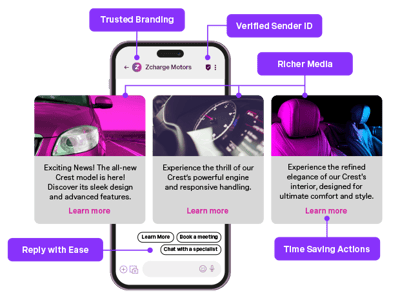
Rich messaging (like RCS or WhatsApp) allows branded visuals, quick replies, and button-based actions, perfect for driving redemption or engagement without friction.
Stay compliant with opt-in and privacy regulations
Customer engagement must respect consent at every step. Make opt-ins:
Clear and specific (what types of messages, how often)
Easy to manage (preferences, frequency)
Secure and centralized (synced across systems)
Ensure messaging platforms are aligned with GDPR, CCPA, and local regulations. Use APIs that support real-time opt-in tracking and data control.
Test, measure, and iterate
Always A/B test copy, timing, and message format. Monitor:
Click-through rates (CTR)
Redemption conversions
Unsubscribe and opt-out rates
Time-to-response
Use these insights to refine templates, adjust cadence, and scale what works. Platforms like Vonage offer API-level reporting to surface these insights across channels.
 Customer Engagement
Overcoming loyalty messaging challenges with scalable solutions
Retail and loyalty-driven businesses face mounting complexity in delivering timely, relevant updates across growing engagement channels. Whether you're managing point balances, bonus campaigns, or redemption notifications, the right messaging strategy must also navigate data fragmentation, opt-in requirements, and personalization expectations.
Below are four common pain points in loyalty program messaging, and how to solve them at scale:
Data syncing across loyalty platforms
Fragmented customer data across CRM, POS, and loyalty systems leads to outdated or conflicting reward messages. To prevent this, unify systems through messaging APIs that pull real-time balances, statuses, and history into each message. This ensures that every touchpoint reflects the latest customer profile and activity.
Managing opt-ins and consent across channels
Regulatory frameworks like GDPR and TCPA require explicit, channel-specific consent. Businesses must centralize opt-in collection and storage across SMS, RCS, and email to ensure compliant outreach. Integrated consent APIs or preference centers can make this process seamless while respecting user preferences.
Personalizing updates at scale
Generic messages fall flat. Customers expect messages to reflect their current tier, rewards, and behavior. By using programmable messaging templates that auto-fill with loyalty-specific fields (like “points expiring soon” or “bonus unlocked”), you can deliver tailored experiences without manual input.
Inconsistent messaging experiences across platforms
A bonus alert in SMS shouldn’t differ from what a customer sees in push or WhatsApp. Use unified workflows and shared message logic across channels to maintain consistency in tone, design, and offer logic, whether it’s a tier upgrade, redemption reminder, or exclusive promo.
Together, these strategies enable scalable, compliant, and more engaging loyalty program communication, building trust while maximizing redemption and retention.
Key loyalty messaging challenges and how to solve them
Challenge
Solution
Data syncing across loyalty platforms
Integrate customer engagement messaging APIs with your CRM, CDP, and POS systems to keep loyalty point balances and status in real time.
Managing opt-ins and consent
Use centralized consent management tools to capture and store preferences across SMS, RCS, email, and app notifications - ensuring GDPR, TCPA, and CCPA compliance.
Personalizing at scale
Apply dynamic message templates that auto-populate with loyalty tier, reward balance, and customer behavior data to tailor updates without manual effort.
Inconsistent experiences across channels
Unify your messaging workflows across SMS, WhatsApp, RCS, and push to ensure reward updates, bonus alerts, and expirations are delivered consistently, regardless of the channel.
How to measure and improve engagement messaging
You can’t optimize what you don’t track. To turn customer engagement messaging into a strategic advantage, retail and loyalty teams must continuously monitor performance, uncover insights, and iterate based on real-world data. Here’s how to measure impact and ensure messaging drives retention, not fatigue.
Core metrics to track
The success of customer engagement messaging isn’t just about delivery, it’s about results. Prioritize the following KPIs:
Metric
What It Tells You
Click-through rate (CTR)
Are recipients taking action on your messages?
Redemption rate
Are loyalty offers and bonuses being claimed?
Opt-in growth
Are customers choosing to engage through messaging?
Unsubscribe rate
Is your message cadence or content too aggressive?
Time-to-response
How quickly do users respond or engage after a message?
Churn rate
Are inactive members dropping off despite outreach?
Net Promoter Score (NPS)
Are messaging interactions improving overall sentiment?
Set benchmarks by channel and segment
Not all channels, or customers, perform the same. Benchmark by:
Channel (SMS, RCS, WhatsApp, in-app, email)
Loyalty tier (e.g., gold vs. basic)
Lifecycle stage (new member vs. long-time customer)
Region or language (for international programs)
This enables targeted improvements and avoids generalizing success or failure.
Use reporting APIs and message analytics
Modern communications API solutions like Vonage offer built-in analytics, webhook-based reporting, and API-level insights that help you:
Track delivery, read receipts, and response time
Identify message drop-off or failure points
Monitor customer feedback signals across channels
Generate custom dashboards to align CX and marketing teams
Look for tools that support cross-channel views, so you can spot what’s working (or not) across WhatsApp, SMS, RCS, and in-app messaging.
Expert Insight — Engagement metrics don’t live in isolation. Your messaging should tie into business KPIs like retention rate, repeat purchase frequency, and loyalty program ROI. Don’t just track opens, track outcomes.
Integrating communications APIs and secure messaging platforms
The effectiveness of customer engagement messaging depends not only on content, but also on the infrastructure behind it. Integrating secure, scalable APIs into your loyalty and messaging stack ensures your updates are timely, compliant, and context-aware, no matter the channel.
Why CPaaS matters for loyalty messaging
Communications Platform as a Service (CPaaS) lets you embed messaging capabilities into your own systems, workflows, or loyalty apps using APIs. This means you can:
Trigger loyalty messages based on customer behavior or purchase data
Sync member profiles, points, and tier changes in real time
Ensure omnichannel consistency across SMS, RCS, WhatsApp, and in-app
With CPaaS, you don’t need to manage telecom infrastructure or build separate tools for every messaging channel, everything routes through one programmable platform.
Role of secure messaging in loyalty communications
Security and compliance are non-negotiable when sending customer data like rewards balances or personalized offers. That’s why secure messaging platforms are critical for:
Encryption: End-to-end protection of sensitive loyalty communications
Consent tracking: Managing opt-ins, opt-outs, and privacy settings
Audit trails: Logging message activity for compliance reviews (GDPR, CCPA)
User verification: Enabling 2FA or authentication before delivering sensitive messages
RCS (Rich Communication Services) also supports these needs with encrypted delivery and brand verification, making it ideal for sending reward updates, QR codes, and bonus offers.
Where Vonage fits in
Vonage provides secure messaging APIs and CPaaS capabilities that support loyalty program automation at scale. With solutions like:
Messages API: Unified delivery across WhatsApp, SMS, RCS, and more
RCS support: Rich messaging with branded content and buttons
Conversational Connect & reporting tools: Build, test, and analyze campaigns in one place
This kind of infrastructure allows loyalty and CX teams to focus on engagement strategy, not backend logistics.
Why customer engagement messaging is essential for modern loyalty strategies
Loyalty is no longer built solely through points and perks, it’s earned through meaningful, real-time communication across every customer touchpoint. As consumer expectations shift toward immediacy, personalization, and transparency, brands need messaging strategies that do more than notify. They need to engage.
Today’s loyalty members expect instant updates about point balances, expiry dates, bonus rewards, and redemption opportunities. They want to receive this information in the channels they already use, whether that’s SMS, WhatsApp, or rich messaging platforms like RCS. Customer engagement messaging meets this demand by delivering proactive, automated updates in a human-like, interactive format.
And the benefits go both ways.
When brands integrate loyalty data with messaging APIs, they not only keep members informed, they improve redemption rates, increase program stickiness, and reduce churn. For example, sending a reminder just before points expire or offering a personalized bonus through a quick reply can recapture otherwise lost value. Adding interactive elements like carousels or buttons further boosts engagement by turning passive updates into two-way conversations.
As omnichannel loyalty programs become more complex, messaging plays an even more vital role in unifying the experience. With centralized APIs and consent-aware workflows, teams can coordinate across platforms, ensuring that every message reflects current customer behavior, preferences, and rewards status.
Sign up now
Was this helpful? Let's continue your API journey
Don't miss our quarterly newsletter to see how Vonage Communications APIs can help you deliver exceptional customer engagement and experiences on their favorite channels.
Thanks for signing up!
Be on the lookout for our next quarterly newsletter, chock full of information that can help you transform your business.
Frequently asked questions about customer engagement messaging
Use automated messages for point balance updates, bonus alerts, and redemption reminders. Include interactive buttons and rich media to drive engagement and make it easy for members to act on offers.
Common channels include SMS, WhatsApp, RCS, in-app messaging, email, push notifications, and chatbot-powered live chat. Use a CPaaS platform to manage these across one API.
Always obtain explicit opt-in from users before sending promotional or personalized content. Store consent securely, honor opt-outs, and follow regional privacy laws like GDPR and CCPA.
Key performance indicators include open and read rates, click-through rates, opt-in volume, churn rates, message response time, and conversion events (e.g., redemptions, upgrades).
Yes, by using first-party data (like loyalty status, purchase history, or location) within a secure messaging platform that supports encryption, consent tracking, and compliant automation.
Messaging APIs allow businesses to trigger personalized messages in real time, sync with CRM and loyalty systems, and automate workflows, all without building each integration from scratch.
RCS supports rich visuals, branding, and interactive elements, offering a more immersive experience than plain SMS. It also provides delivery/read receipts and secure communication.