Personalized Offers: Maximizing Engagement Across Messaging Channels
Marketers today are under pressure to deliver measurable results without overwhelming customers. The most effective path forward is relevance, and personalized offers help brands achieve just that. These promotions are tailored based on real-time behavior, past purchases, demographics, and engagement patterns. When executed well, they drive higher conversion rates, boost loyalty, and increase average order value, all while respecting privacy and consent.
The modern promotional landscape spans SMS, RCS, and chat apps like Messenger. Brands need a unified strategy that personalizes across channels, maintains compliance, and optimizes performance. That means relying on data-driven segmentation, A/B testing, and automation, not guesswork.
-
1.
-
2.
-
3.
-
4.
-
5.
-
6.
-
7.
-
8.
-
9.
What are personalized offers, and why do they matter?
Personalized offers are tailored promotions that adapt to an individual’s preferences, behaviors, and buying patterns. Rather than broadcasting a generic discount to an entire customer base, personalized offers align with each recipient’s unique context, whether it’s a product recommendation based on purchase history, a birthday discount, or a timely reminder about an abandoned cart.
What powers these offers is data. Brands analyze shopping habits, browsing activity, demographics, and engagement signals to anticipate what customers need, when they need it, and how they prefer to receive it. Whether your audience includes loyal repeat buyers or first-time browsers, a personalized approach can speak to them directly, at scale.
Business impact of targeted promotional messaging
Increased conversions happen when shoppers receive offers that feel relevant to their needs.
Stronger loyalty builds as personalized, timely offers encourage repeat engagement.
Higher average spend results from offers aligned with previous purchases or interests.
Lower churn is achieved when re-engagement campaigns reflect past customer behavior.
How do retailers and brands personalize offers effectively?
Collecting customer data across platforms
To build meaningful personalization, companies begin by collecting data from every channel where customers interact. This includes:
Ecommerce platforms like Shopify, Magento, or WooCommerce
CRM systems such as Salesforce and HubSpot
Email marketing tools like Klaviyo or Mailchimp
Loyalty and POS systems for in-store transactions
By unifying this data, marketers gain a holistic view of each customer’s behavior across touchpoints.
Segmenting your audience with purpose
Once data is centralized, the next step is segmentation. Instead of one-size-fits-all campaigns, brands can group customers by:
Behavioral signals (e.g., cart abandonment within 24 hours)
Purchase history (e.g., customers who spent $300+ in the last quarter)
Demographics (e.g., Gen Z customers in urban regions)
Engagement stage (e.g., newly subscribed vs. lapsed users)
Effective segmentation is the engine behind contextual and timely messaging.
Matching offer type to customer need
Different types of personalized offers work best for different audiences and situations. Below is a quick reference for common use cases:
Offer Type
Example
Best For
Welcome discounts
“10% off your first order”
New customers
Loyalty rewards
“Earn double points on your favorite brand”
Repeat buyers
Cross-sell/upsell
“Add these matching headphones — now 15% off”
Customers with recent purchases
Geo-targeted deals
“Free next-day delivery in San Francisco”
Localized audiences
Event-based offers
“Happy Anniversary! Enjoy 20% off today only”
Life cycle-based messaging
Choosing the right personalization tools
To execute these strategies at scale, businesses often rely on a range of integrated tools, many powered by AI and machine learning. Common components of a personalization tech stack include:
Personalization engines for testing and targeting (e.g., AI-driven optimization tools)
Messaging platforms that support SMS, RCS, and chat automation
On-site personalization tools for dynamic content and recommendations
Customer data platforms (CDPs) to unify and activate customer insights
Each tool plays a role in refining messaging, automating delivery, and ensuring relevance.

A/B testing and real-time offer optimization
No personalization program is complete without testing. Leading brands A/B test:
Types of incentives (e.g., 15% off vs. free shipping)
Timing (immediate follow-up vs. delayed offer)
Channel (SMS vs. push notification vs. email)
These tests help marketers optimize click-through rates, conversions, and overall ROI. Measurement closes the loop between intent and outcome.
Personalized offer flow: a real-world example
Imagine this scenario: A shopper adds a winter coat to their cart but exits before completing the purchase.
One hour later: They receive a personalized SMS, “Still thinking about that coat? Take 10% off if you order before 10 PM.”
48 hours later: They receive a follow-up on Messenger, “Only 2 left in your size. Want us to hold one for you?”
This mix of channel timing, urgency, and personalization often leads to higher conversion and better customer retention.
How to deliver personalized offers across SMS, RCS, and chat apps
Customers don’t just interact on one platform, they move fluidly between SMS, RCS, WhatsApp, Messenger, and other chat environments. To stay relevant, brands need to personalize offers not only based on who the customer is, but where and how they engage.
A truly cross-channel promotional strategy requires careful coordination across messaging formats, user consent, and timing. Here’s how to make your personalized offers work effectively across today’s most important messaging channel: SMS, RCS, Messenger WhatsApp, and other chat apps.
SMS: The foundation for direct, personal engagement
SMS remains one of the highest-performing channels for personalized offers, especially when timing and context align. Businesses using SMS marketing are 5.89 times more likely to report digital‑marketing success than those that don’t.
Best practices for personalized SMS offers:
Use dynamic merge fields (e.g., first name, last product viewed)
Include short, time-sensitive CTAs: “Grab 15% off in the next 2 hours”
Use link shorteners for cleaner display and better tracking
Respect character limits, brevity drives clarity
Pro tip: Segment audiences by behavioral triggers (e.g., abandoned cart) and send automated SMS messages tied to those actions for maximum relevance.
RCS: Rich media and interactivity at scale
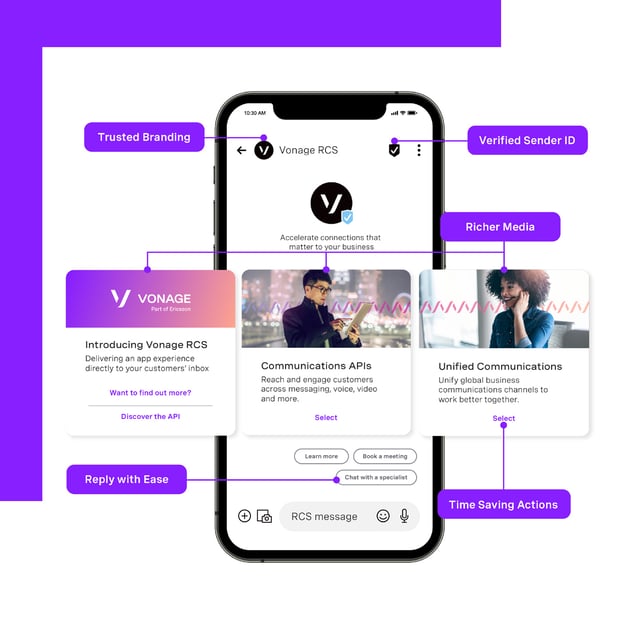
Rich Communication Services (RCS) expands SMS with interactive features, multimedia support, and branding elements. Think of it as SMS evolved, with buttons, carousels, and image/video embedding.
Key use cases for RCS personalization:
Show product bundles based on browsing history
Use carousels for personalized recommendations
Let users click-to-apply discounts or book demos
Offer rich receipts, shipping updates, or loyalty point reminders
Common mistake: Treating RCS like traditional SMS. To unlock its full value, use visuals and quick-reply options tailored to the user’s journey stage.
Messenger, WhatsApp, and chat apps: Conversational personalization
Chat apps open the door for two-way, dynamic engagement. Offers can be delivered through conversations, where users can reply, ask questions, or click to redeem, all in one thread.
Effective strategies for chat-based offers:
Re-engage lapsed users with product-specific messages
Offer loyalty perks directly in the conversation
Personalize content based on previous message history
Use bots to tailor suggestions and guide users through purchase
Channel capabilities
Channel
Rich Media
2-Way Messaging
Automation
Opt-Out Support
SMS
RCS
Facebook Messenger
Using data and segmentation to tailor promotions
Effective personalization starts with understanding who your customers are and what they actually want. While broadcast messaging treats every contact the same, data-driven segmentation allows you to deliver offers that are context-aware, time-sensitive, and relevant to each recipient’s behavior or life cycle stage.
Here’s how to build segmentation strategies that fuel higher conversions and better customer experiences.
Segment based on behavior and transaction history
Customer behavior provides strong signals for targeting. Look at actions like:
Cart abandonment
Product page views
Frequency of purchases
Time since last interaction
Average order value (AOV)
For example, a customer who recently browsed hiking boots but didn’t buy may respond well to a 10% discount with urgency. Someone who buys monthly may appreciate a “VIP” loyalty reward instead.
In fact, 80% of businesses that use segmentation in their marketing efforts report an increase in sales. underscores how much more effective real-time, action-based targeting can be.
Use demographic and regional segmentation
Demographic traits such as age, location, or language can shape what kind of offer feels most appropriate.
Age-based offers work well by focusing on style for Gen Z and highlighting durability for Gen X
Region-specific deals succeed when same-day shipping is offered in metro areas or cold-weather gear is promoted where it's most relevant
Cultural alignment improves engagement by timing promotions around local holidays, sporting events, or regional celebrations
Common mistake: Ignoring local context. A blanket offer across all regions may perform worse than several tailored ones, even if the discount is smaller.
Identify life cycle and engagement stages
Not every customer is at the same point in their journey. Mapping users to engagement stages enables precision.
New subscribers benefit from welcome offers or onboarding flows
Repeat buyers respond well to loyalty perks or early-access deals
Dormant users can be re-engaged with win-back offers based on their last purchase category
Highly engaged customers are ideal for upsells tied to their past purchases or recently viewed products
By aligning offers with life cycle moments, you boost relevance and show that you understand the customer’s relationship with your brand.
Balancing personalization with compliance and privacy
As personalization becomes more sophisticated, the margin for error around compliance shrinks. Customers expect tailored offers, but they also demand control over how their data is used and how often they’re contacted. Navigating this balance is critical for both customer trust and legal protection.
Understand and honor channel-specific consent rules
Not all messaging channels have the same consent requirements. SMS, for instance, is tightly regulated and typically requires explicit opt-in under laws like the TCPA and GDPR. RCS and chat apps may have more flexibility but still fall under global data privacy frameworks.
Marketers must:
Capture and store consent at the point of data collection
Clearly explain what users are signing up for (e.g., promotional messages, frequency)
Segment based on opt-in source to avoid accidental violations
Use double opt-in flows when required
One study noted that 79% of consumers are more likely to engage with a brand that offers a transparent data usage policy.
Build smart unsubscribe and opt-out experiences
Offering users a simple, frictionless way to opt out is not just a legal requirement, it’s good UX. Poor opt-out processes often lead to complaints, spam reports, and long-term disengagement.
Best practices include:
Including unsubscribe links or STOP instructions in all SMS and RCS messages
Enabling granular preferences (e.g. opt-out of offers but keep order updates)
Sending opt-down prompts before full unsubscribes
Auto-updating suppression lists across platforms
Align personalization with privacy-first design
Personalization doesn’t require invasive data collection. With thoughtful use of first-party data (purchase history, site behavior) and consent-based segmentation, marketers can craft relevant offers while respecting user privacy.
Implement:
Transparent privacy notices
Clear explanations of why data is collected
Options to edit communication preferences
“Privacy-first” defaults in automation tools
Pro tip: Use your compliance practices as a competitive differentiator. Customers value brands that demonstrate responsibility, especially in highly personal messaging spaces like SMS and chat.
A/B testing personalized messages for better campaign performance
Personalization alone doesn’t guarantee results. Even the most tailored offers need continuous optimization to perform at scale. That’s where A/B testing comes in, allowing marketers to test variables like message content, timing, and channel to identify what drives real engagement.
Test what matters most: Offer, timing, and format
A/B testing works best when it’s focused on decisions that affect conversion. For personalized messaging, that means:
Offer type: Discount vs. free shipping
Copy variation: “Just for you” vs. “Our most loyal customers”
Timing: Immediate follow-up vs. 24-hour delay
Format: Plain-text SMS vs. rich RCS with media
Channel: SMS vs. WhatsApp vs. email
By testing one variable at a time, you can isolate what’s driving clicks, redemptions, or replies.
Measure the right performance metrics
Don’t stop at open or click rates. For promotional campaigns, more meaningful metrics include:
Redemption rate measures how many recipients actually used the offer
Conversion rate shows whether the message resulted in a purchase
Revenue per message tracks ROI by channel and audience segment
Unsubscribe or opt-out rate indicates if the message was well received
Tracking these KPIs across segments reveals where personalization hits or misses, and whether you’re getting closer to the customer, or driving them away.
Build a testing loop into your messaging automation
High-performing teams don’t test once; they test continuously. Make A/B testing a repeatable part of your automation flow:
Design the test with clear variables and goals
Split your target segment evenly
Launch and let the test run for a statistically valid duration
Review performance data across cohorts
Push the winning variant and iterate again
Examples of personalized promotional offers that convert
Effective personalized offers do more than insert a name or reference a past purchase. The strongest campaigns align timing, message, and channel with the user’s intent and behavior. Below are real-world scenarios that demonstrate how different industries personalize successfully, and why it works. Please note these are hypothetical examples and do not reflect actual offers or customers.
Example 1: Retail re-engagement after cart abandonment
Customer behavior: Viewed and added items to cart but didn’t complete checkout.
Personalized offer: “Still thinking about those hiking boots? Take 15% off before midnight. Tap to complete your order.” (Sent via SMS)
Why it works: Combines urgency, product specificity, and a clear next action. Using SMS ensures the message reaches the customer quickly, making it ideal for time-sensitive nudges.
Example 2: Loyalty reward based on purchase history
Customer behavior: Repeat buyer with multiple purchases over 6 months.
Personalized offer: “You’ve earned double points on your favorite skincare brand this week only.” (Sent via RCS with branded visuals)
Why it works: Builds loyalty by recognizing and rewarding long-term value. Using RCS allows richer creative elements to reinforce brand identity and capture attention.
Example 3: Geo-targeted promo for local events
Customer behavior: Lives in the Chicago metro area, browsed concert apparel.
Personalized offer: “Chicago fans: Get 20% off festival looks this weekend. Local pickup available.” (Delivered via Messenger)
Why it works: Combines location, browsing history, and event timing. Messenger supports fast two-way interaction for questions or product recommendations.
Example 4: Life cycle-based birthday offer
Customer behavior: Subscribed 9 months ago, birthday on file.
Personalized offer: “Happy Birthday, Maya! A gift from us: 20% off anything you love, today only.” (Sent via email + SMS reminder)
Why it works: Personal and timely, this life cycle message celebrates the customer while prompting immediate action. Multichannel delivery ensures it gets seen.
Example 5: Post-purchase upsell
Customer behavior: Bought a laptop 10 days ago.
Personalized offer: “Complete your setup, 25% off wireless accessories for the next 48 hours.” (Delivered via push + SMS)
Why it works: Tailored based on a recent transaction. The short window creates urgency, and complementary product logic increases average order value.
Drive measurable results with personalized offers
Reaching the right customer with the right offer at the right time is only part of the equation. What sets high-performing campaigns apart is the ability to scale that precision across channels, ensure regulatory alignment, and adapt quickly based on performance insights.
With Vonage Messages API, businesses can deliver personalized promotions through SMS, RCS, WhatsApp, Messenger, and more, all from a single, programmable platform. Built-in tools for opt-out management, message failover, rich media support, and campaign testing make it easier to engage customers where they are while staying compliant and efficient.
Explore Vonage Messages API now.
And if you’re interested in exploring how Vonage messaging solutions pair with branded calling and other personalized engagement to take customers from unread to must-read, then it’s time to Own Your Brand.
Sign up now
Was this helpful? Let's continue your API journey
Don't miss our quarterly newsletter to see how Vonage Communications APIs can help you deliver exceptional customer engagement and experiences on their favorite channels.
Thanks for signing up!
Be on the lookout for our next quarterly newsletter, chock full of information that can help you transform your business.
Frequently asked questions about personalized offers
A truly personalized offer considers a customer’s behavior, preferences, location, and purchase history, not just their name. It adapts content, channel, and timing to reflect what the customer is most likely to find relevant at that moment.
Use platforms that support consent management and provide transparency around data use. Stay compliant with regional regulations like GDPR or TCPA by managing opt-ins, honoring unsubscribe requests, and storing only necessary data.
RCS, WhatsApp, and Facebook Messenger allow images, video, buttons, and carousels. These channels enhance personalization by letting you match message format to content, for example, showcasing product bundles or location-specific promotions.
Yes. Despite its simplicity, SMS has high open rates and is ideal for time-sensitive offers. When paired with segmentation and opt-out controls, it remains one of the most effective tools for reaching mobile-first audiences.
Absolutely. With unified APIs or messaging platforms, teams can run controlled A/B tests across SMS, RCS, and chat apps. You can compare offer types, message timing, or media use to optimize based on actual engagement.
Segmentation groups users by shared traits; personalization takes it further by tailoring content to individual behaviors. For example, segmentation might target “loyal customers,” while personalization adds, “who recently browsed men’s sneakers.”
Look beyond open and click rates. Focus on conversion rate, customer lifetime value, unsubscribe rate, and ROI per segment. Platforms with reporting APIs can help consolidate these metrics across channels.